Martin Seck

Ready to Skate!

November 19, 2019

The winter ice-skating season at the LeFrak Center at Lakeside in Prospect Park will begin Wednesday, November 20, 2019, with open skating hours the entire family will enjoy.

The LeFrak Center at Lakeside is Brooklyn’s premier ice skating destination. The center welcomes the public for ice skating as well as lessons and leagues in a range of winter ice activities, from figure skating to hockey and curling. 

This season, Lakeside is updating its fleet of ice skates with brand-new skates for rent, which will roll out in the coming weeks. In addition, world-renowned Olympic figure-skating athletes Melissa Gregory and Denis Petukhov have been appointed as Directors of Sports Programs for Lakeside’s growing Skate School.

Gregory and Petukhov represented the United States in the 2006 Winter Olympics in Torino, Italy, and claimed six consecutive U.S. National Championships medals. They won the United States Olympic Committee “Rings of Gold” award for innovative sports programming and youth development, and continue to represent the United States Olympic ideals. Along with Hockey Director Greg Vaslet, the team will further strengthen Lakeside’s commitment to the community by providing exceptional coaching and expanded learn to skate programs. 

Learn-to-Skate and Learn-to-Play-Hockey classes will kick off the week of December 2, 2019. Interim booster classes for all ages will be available the weekends of November 23/24 and November 30/December 1 at 9 am for hockey, and 10:30 am for skating. To register, please contact [email protected].

The LeFrak Center at Lakeside is a year-round recreational destination created by Prospect Park Alliance and NYC Parks, and operated by Upsilon Ventures, featuring ice skating and related sports in the winter months and biking, boating, roller skating and water play in the spring through fall. This 26-acre destination also includes a cafe and beautifully landscaped terraces and an esplanade to enjoy all four seasons. Lakeside opened to the public in 2013, and is the most ambitious project in the history of the park since its creation in 1867. It serves more than 250,000 people each year.

Visit our Lakeside page for hours, admission and additional information.

Martin Seck

Prospect Park Alliance Tackles Toxic Algae Blooms

November 18, 2019

Prospect Park Alliance has begun construction of natural filtration system, known as an ecoWEIR, to reduce toxic blue-green algae blooms and improve the water quality of the park’s waterways. This innovative pilot program, the first in an urban park, is funded by the New York State Office of Parks, Recreation and Historic Preservation through a $390,000 grant.

While the Park is a natural wonderland, many people are not aware that Prospect Park’s lake, pools, waterfalls and streams are fed by the New York City water supply. Phosphates in the water, which make it safe for us to drink, lead to excessive algae growth. This algae growth limits resources for other plant life and wildlife, which is detrimental to the health of the Park’s waterways.

Phosphates in the water also produce blooms of blue-green algae, or cyanobacteria. Certain types of cyanobacteria produce toxins that can pose a health risk for humans and animals. Skin contact can cause rashes or eye irritation, while ingestion can cause more serious effects. These blooms have led to closing areas of the Prospect Park Lake that were previously available for dogs to swim due to concerns over exposure.

The Alliance is installing ecoWEIRs at two locations in the park, near Dog Beach (where city water enters the watercourse). The aim of this system is to reduce phosphates, thereby reducing excessive algae growth. The filtration system and its results will be monitored over the course of multiple seasons to determine if the pilot study is a success. In addition to enhancing the health and resilience of the Prospect Park Lake, this project provides an opportunity to educate the public about water health. If successful, the Prospect Park ecoWEIR project will be replicable in parks nationwide. 

Construction is slated to be completed in 2020.

Learn more about the project in this in-depth article on Gothamist.


c. Steve Nanz

Where Do The Animals Go In Winter?

November 13, 2019

Like Holden Caulfield before us, we’re asking, “where do the ducks go in the winter?” In fact, we want to know how all of Prospect Park’s year-round animal residents survive the season when temperatures dip below freezing. Read on below, and make sure to join Prospect Park Alliance at the Audubon Center to learn more about the park’s animal inhabitants.

Chipmunks
Prospect Park is home to one of the only populations of chipmunks in Brooklyn. As days get shorter and temperatures begin to fall, chipmunks shore up their underground burrows, cache  enough food to get them through winter, and hibernate. Their body temperature drops as low as 40 degrees, and their heart rate slows as low as 4 beats a minute! Chipmunks don’t spend the whole winter asleep. Every few days they awaken, eat some of their stored food, go to the bathroom and curl back up to wait for spring.

Turtles
Visitors to Prospect Park’s Lake are used to seeing turtles—often red-eared sliders—basking on sunny rocks and logs in summertime. When winter comes these creatures do not hibernate,  but “brumate” at the bottom of the Lake: remaining active while adjusting their bodies to the freezing conditions. As the temperature drops their blood thins, and they require less energy to move blood around their body. Consequently, they only need to eat, drink and breathe enough to barely keep the body going. It is not an uncommon sight to see a red-eared slider ambling around a pond floor under inches of ice!

Birds
Birds can be seen enjoying Prospect Park’s 585 acres year round, but not all birds enjoy the winter weather. Many species of birds make themselves scarce when the colder weather arrives, heading for southern latitudes. However, plenty of birds  have adapted to make the most of the cooler temperatures. During these months, they spend their days searching for food and staying warm. Their uninsulated feet are largely freeze-resistant, and by fluffing out their feathers—often appearing to double in size—the birds stay warm. Keeping their body temperature consistent requires lots of fuel, and they  are usually on the hunt for their next meal.

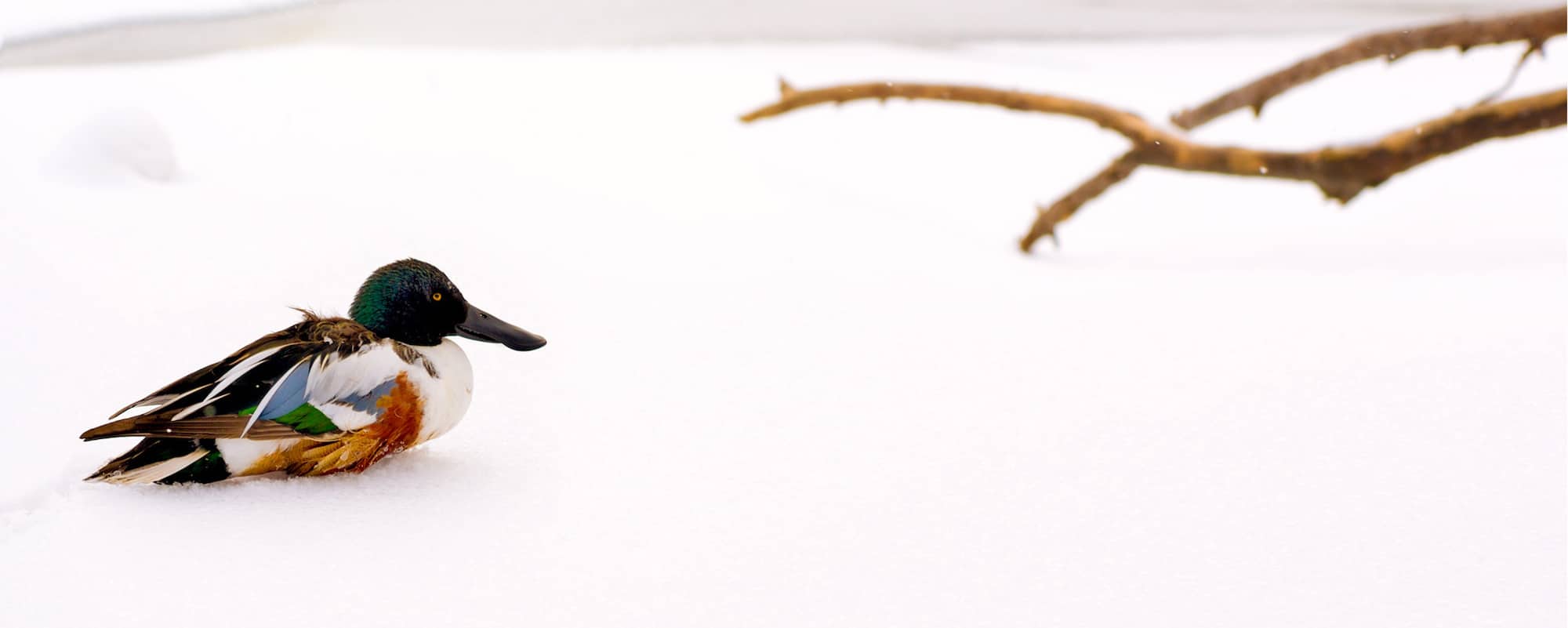
Many ducks stay in the park all winter long, enjoying the Lake’s freezing waters. These ducks are extremely hardy, due to a thick layer of fat and down under their waterproof feathers.

Duck_Northern-Shoveler-on-Prospect-Park-Lake_Joseph-O.jpg

A Northern Shoveler on Prospect Park Lake, c. Joseph O. Holmes

Fish
Prospect Park’s Lake is filled with fish, and as cold-blooded creatures, their metabolism dips when temperatures take a dive. In this resting state, fishes’ hearts slow down, their needs for food and oxygen decrease, and they move about very little. As ice forms on top of a lake, warm water sinks, and fish gather in groups near the bottom to stay warm. Some species burrow into the mud and go dormant, while other fish school together in “wintering holes” in deep pockets of the Lake.

Squirrels
Used to seeing squirrels in the park year round? That’s because squirrels are “homeotherms,” their body temperature does not fluctuate so they do not hibernate. Before winter arrives, squirrels can be seen hiding stashes of food in shallow holes and covering it up. When food becomes scarce, they will return to these locations and dig up  a meal. To minimize exposure, squirrels spend less time outside their dens during the colder months, and it’s common for several squirrels to share a den, allowing them to take shelter and keep each other warm.

Frogs
Frogs live in a variety of environments in the park, and likewise have a variety of ways of coping with the cold temperatures. Some aquatic frogs spend the winter at the bottom of the Lake, with a slowed-down pace and metabolism like  fish and turtles. Others burrow into the ground and hibernate the winter away. And some frogs, like spring peepers—loud tree frogs—can freeze solid! They stop breathing and their hearts stop beating, but high concentrations of glucose in their blood acts as a natural antifreeze, allowing their bodies to stay safe until they thaw in warmer weather.

Learn much more about park nature and meet turtles, fish and other park critters with Prospect Park Alliance at the Audubon Center.

c. Martin Seck

Cold-Weather Running Tips

October 17, 2019

Winter is approaching, but that doesn’t mean you have to stop running in the park! Prospect Park Alliance teamed up with our friends at New York Road Runners to bring you tips for cold-weather running so you can stay in fighting form for upcoming races. Use these tips in the lead up to the 2020 United Airlines NYC Half, taking place on March 15, 2020 starting right here in Prospect Park. The application period for this race is now open and runs through November 13.

Wear synthetic fabrics and layer your clothing. In the cold, keep most of your body covered. The fabric closest to your skin should be synthetic and preferably sweat-wicking and it should fit snugly. Your outermost layer should be wind-resistant and waterproof if it’s raining or snowing. If you plan to race in the cold, it’s smart to test everything that you plan to wear in advance to make sure it’s warm enough and comfortable to race in.

Respect your body and your limits. Cold temperatures restrict blood flow, which can cause muscles to contract and even cramp. You may feel stiff and tight, especially as you begin a run, and if you try to force the pace, you may damage a muscle. Adjust your pace to allow your body extra time to warm up.

Don’t forget to drink. In cold weather, it’s easy—and unsafe—to overlook your fluid needs. Your body is still sweating, so replenish your fluids appropriately. Prospect Park Alliance’s new freeze-resistant fountains are year-round hydration stations, so make sure to take advantage of them while you run!

Protect your face, head, and extremities. Wear a hat and gloves, preferably of synthetic, wicking material, and in extreme cold, use a face mask or scarf to cover your neck and face. Wind increases the effects of the cold; you may risk a mild form of frostbite called “frost nip” on unprotected areas if it’s near-freezing and windy. Apply a sweat-resistant sport moisturizer and lip balm for extra protection. 

Shorten your stride in snow, ice, sleet, or heavy rain. If there is snow, ice, or excessive water on the ground, shorten your stride slightly and pay attention to your footing and the runners around you to avoid accidents. Ice creates a much greater danger of a slip-and-fall, which can send you to the hospital with a broken bone. If you race in this kind of weather, don’t expect to run a personal best; instead, plan for a safe race.

Take care of yourself after your run. Get inside right away; although you’ll feel warm just after completing a run, you will chill quickly. Keep moving, and get inside as soon as you can. For a race in the wet or cold, have warm clothing on hand post-race. This includes dry socks, warm sweatpants, a long-sleeved shirt, a sweatshirt and/or jacket, gloves, and a warm hat. 

Learn more about running in Prospect Park, and check out NYRR’s Group Training, coach-led workouts that meet at Grand Army Plaza on Tuesdays and Thursdays. Upcoming sessions kick off in November and January.

See you on the loop!

c. Steve Nanz

Park Wildlife By the Numbers

October 16, 2019

Most people know Prospect Park as a large, public green space where Brooklyn’s diverse community comes to gather—but did you know that community includes an amazing diversity of wildlife? Prospect Park Alliance crews restore and maintain these natural spaces where this array of species thrive. We’re breaking down Prospect Park’s fauna by the numbers to remind you just how essential these 585 acres are. 

292 Species of Birds, 71 Nesting Bird Species
Prospect Park hosts numerous species of birds year round, but the park is also extremely important to migratory birds. Twice a year during the migration seasons, millions of birds fly over New York City via the Atlantic Flyway. Flying over Brooklyn, many birds take advantage of Prospect Park’s prime location and natural habitat to rest, refuel and prepare themselves for the rest of their journey. 

15 Species of Mammals
Anyone who has taken a walk through Prospect Park’s woods is familiar with a few of the mammal species in the park—squirrels are ubiquitous and chipmunks abound (and are one of the only populations of chipmunks in Brooklyn). Unsurprisingly, the park hosts raccoons and mice, but did you know that park is home to at least 6 species of bats (possibly up to 9), rabbits, and as of 2019, a skunk!

14 Species of Fish
Prospect Park is home to Brooklyn’s only lake, and this ecosystem hosts a wide variety of fish. Catch-and-release fishing is permitted in Prospect Park, and potential catches include pumpkinseeds, bluegills, and even largemouth bass of impressive size!

6-8 Species of Reptiles and Amphibians
A common sight in Prospect Park are turtles sunning themselves throughout the park’s watercourse, much to the delight of visitors. These are most frequently red-eared sliders, but other reptile and amphibian species include American bullfrogs and snapping turtles. 

1000+ Species of Insects, Including 35 Butterfly and 59 Bee Species
Any estimate of the number of insect and arachnid species in Prospect Park is likely to be an underestimate—these creeping, crawling and flying creatures are numerous and an essential part of the park’s ecosystem even in an urban environment. No concrete species number exists for invertebrates, as most insect groups in the park have not been counted. However, there are an estimated 21 species of odonates (dragonflies and damselflies), at least 35 species of butterflies, and approximately 59 native bee species—28% of all bee species east of the Mississippi River!

Prospect Park also hosts an amazing diversity of plant species, and is both and “ark” and a “source” for species, meaning that it is the last place in Brooklyn for some habitats and species, as well as a genetic reservoir for local plants and creatures. Prospect Park Alliance’s crews work year-round at ecological restoration—enhancing and creating habitats dominated by native species that provide wildlife habitat and encourage conditions of natural habitat succession. 

Interested in learning more? Head to the Sustaining the Environment section of our website, and consider getting involved with Prospect Park Alliance to support our mission. 

c. Martin Seck

Archtober 2019 Tours in Prospect Park

October 2, 2019

It’s Archtober, and NYC’s architecture and design month features hundreds of events, tours, and exhibitions. Four of these tours are taking place right in Brooklyn’s Backyard, and you’re invited! Presented in partnership with Prospect Park Alliance and Turnstile Tours, check out the month’s lineup:

Prospect Park Tour: Hidden Treasures
Sunday, October 6 , 10:30 am – 12:30 pm
Join Prospect Park Alliance and Turnstile Tours to explore some of the little-known corners of Prospect Park in this tour that uncovers some of the park’s hidden treasures. Once prime attractions, these areas are currently the focus of Prospect Park Alliance restoration efforts to revitalize the Park. The tour includes the Rose Garden and Vale of Cashmere in the park’s northeast corner, and well as a guided walk through Brooklyn’s last remaining forest, the 150-acre Ravine.
button-buy-tickets.png

Prospect Park Tour: Art + Architecture
Friday, October 11 , 4 pm – 6 pm
Join Prospect Park Alliance and Turnstile Tours for a special Friday evening tour in celebration of Archtober. For over 150 years, Prospect Park has been a showcase of public buildings and artwork. This tour examines beautiful representations of Beaux-Arts, City Beautiful, New Deal Modernism, and LEED-certified park destinations.
button-buy-tickets.png

Prospect Park Tour: Waterways + Wellhouse
Sunday, October 13 , 10:30 am – 10:30 am
Join Prospect Park Alliance and Turnstile Tours for a tour in celebration of Archtober. Prospect Park is a marvel of engineering, with a man-made watercourse weaving through forests and meadows to a 60-acre lake. Explore the restored watercourse as well as the 1869 Wellhouse, once the world’s largest well, now home to the first composting toilets in a NYC public park. 
button-buy-tickets.png

Prospect Park Tour: Exploring the East Side
Saturday, October 26 , 1:30 pm – 3:30 pm
Join Prospect Park Alliance and Turnstile Tours for a tour in celebration of Archtober. Explore Prospect Park’s East Side, including works in progress (Rose Garden, Flatbush Avenue perimeter), upcoming improvements (Lefferts Historic House), and recent and historic park treasures (Carousel, Lakeside and WPA art + architecture of the Prospect Park Zoo).
button-buy-tickets.png

Learn more about Tours in Prospect Park.

c. Steve Nanz

3 Bird Migration Hotspots

September 20, 2019

Bird migration season is in full swing here in Brooklyn, and there’s no better place to see the hundreds of species passing through than Prospect Park. In recent years, Prospect Park Alliance has made an effort to reduce invasive plant species and encourage the growth of native trees, shrubs, flowers and grasses—and our feathered friends could not be happier about it. Native plants produce seeds and berries, and host a variety of local insects, all of which our local and migratory birds love to snack on. Head into the park during this migration season for a chance to see a few of the more than 200 bird species that use Prospect Park as a rest stop. We suggest these park birding hotspots:

Lookout Hill
Lookout Hill is the highest peak in Prospect Park, part of the Terminal Moraine left by glaciers in the last ice age that extends through Brooklyn. Prospect Park Alliance’s horticulturalists and Natural Resources Crew have been hard at work maintaining Lookout Hill’s natural spaces, including the Butterfly Meadow. The geography of Lookout Hill, combined with the abundance of native food sources, make this a top-notch destination for birds (and fellow birdwatchers) during migration season. Find a variety of songbirds including many species of warblers, as well as raptors enjoying the vista. 

Prospect Park Lake
Whether you’re walking the shores of the Peninsula, or staring through binoculars at Music Island, Prospect Park Lake—Brooklyn’s only lake—is a fabulous destination for birdwatching. Since the opening of the LeFrak Center at Lakeside in 2013, this area of the park has enjoyed a dedicated crew of Alliance gardeners who maintain the plantings and the facility’s green roof. The 55-acre lake is a year-round destination for waterfowl and shorebirds, and migration season means you’re sure to see something spectacular no matter which way you look.

Vale of Cashmere
In 2012, Prospect Park lost over 500 throughout the park due to Hurricane Sandy, with 50 alone in the Vale of Cashmere. Thanks to grants from the National Parks Service through the Hurricane Sandy Disaster Relief Assistance Grant Program for Historic Properties, the Alliance was able to hire a dedicated crew to restore this area of the park. Over the course of years, the crew removed damage, used a popular goat team to clear invasive species, and in 2017 planted over 20,000 native plants and shrubs. The result? A bird haven in a quiet corner of the park. Head here to watch songbirds enjoying the landscape, and discover a part of Prospect Park you may never have seen before.

Check out the birdwatching page on our website for more information on birdwatching in Prospect Park, and visit the Brooklyn Bird Club website for the latest bird sightings. 

Prospect Park Alliance

New Entrances for Prospect Park

September 19, 2019

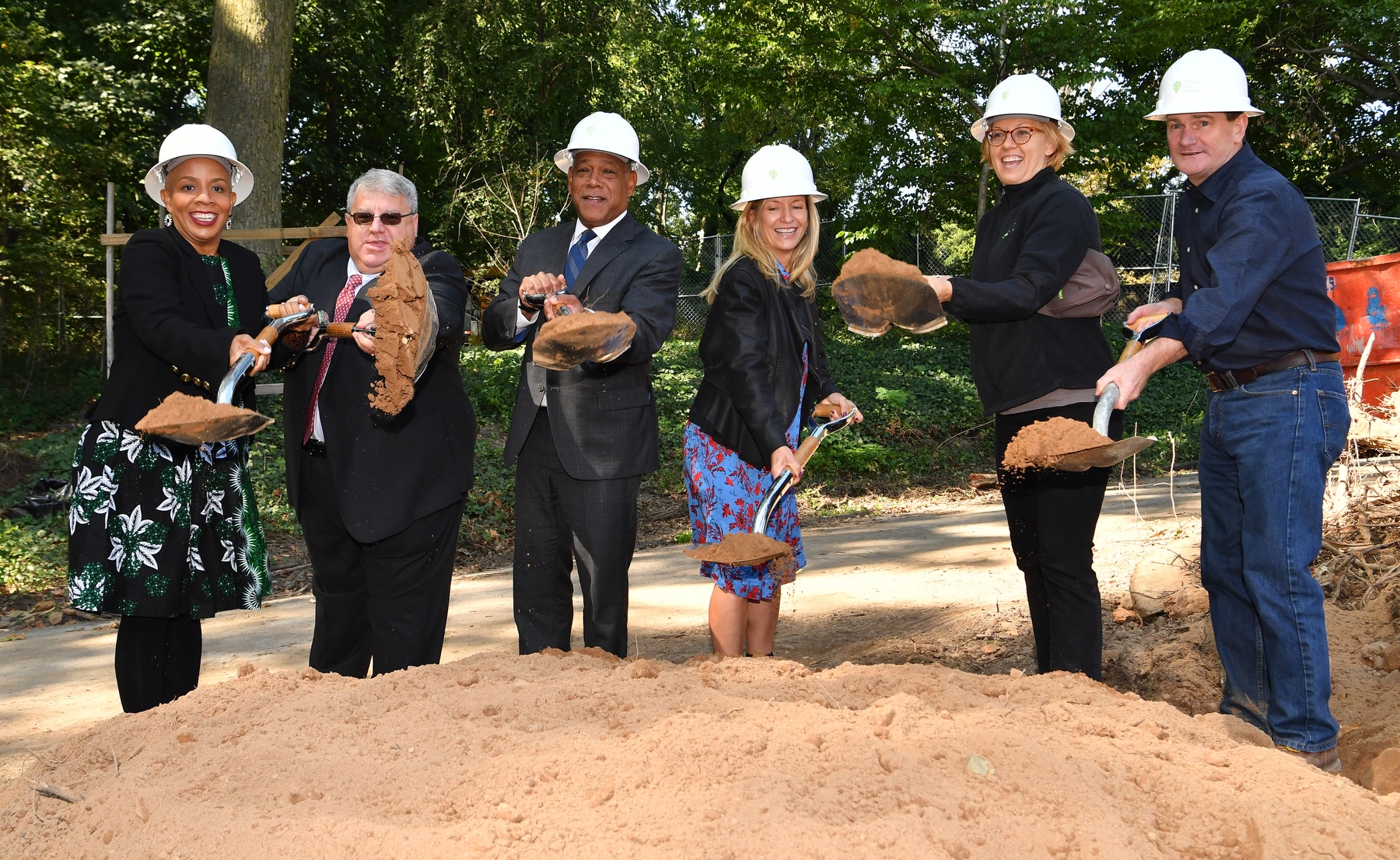
Today, NYC Parks Commissioner Mitchell J. Silver, FAICP, and Prospect Park Alliance President Sue Donoghue celebrated the start of construction of new entrances to Prospect Park along Flatbush Avenue, the first new entrances to the park since the 1940s. With overwhelming support from the community, Prospect Park Alliance received $3.2 million in funding from Mayor Bill de Blasio for this project through NYC Parks’  Parks Without Borders initiative, which seeks to make parks more open by improving entrances, transforming underutilized areas and creating vibrant public spaces. 

“For the first time in more than seven decades, we’re giving New Yorkers a new way to enter one of the City’s most beloved parks,” said NYC Parks Commissioner Mitchell J. Silver, FAICP.  “Thanks to the Mayor’s investment in Parks Without Borders we are changing the way parks intersect with the communities, and increasing accessibility. Upon its completion, this new entrance into Prospect Park will be a gateway for generations of families to come in and explore everything this historic park has to offer.”

“Prospect Park Alliance is committed to making Prospect Park open and accessible to all communities it borders,” said Prospect Park Alliance President Sue Donoghue. “I want to thank Mayor Bill de Blasio and NYC Parks Commissioner Silver for their innovative Parks Without Borders initiative, and the many community members who came out in support of this project. These new entrances will serve as an important gateway to the park for our east side communities, and to the park’s northeast corner, a focal point of our future restoration efforts.”

Flatbush Entrance Groundbreaking Photo Op

From Left: City Council Majority Leader Laurie Cumbo, Borough Parks Commissioner Martin Maher, Parks Commissioner Mitchell Silver, Alliance President Sue Donoghue, Alliance Landscape Architect Svetlana Raguliana, Alliance VP of Capital and Chief Landscape Architect Christian Zimmerman

“The Parks Without Borders project on Flatbush Avenue perfectly complements my administration’s multi-million dollar investment in revitalizing the eastern and southern borders of Prospect Park, the crown jewel of our borough’s open space,” said Borough President Eric L. Adams. I am excited to see us progress toward increased access for recreation and relaxation opportunities, which will offer a safe and welcome entrance for pedestrians, cyclists, skaters, and anyone who wants to enjoy the park.”

“After many years of advocacy by the community, we finally broke ground on the two new entrance ways for Prospect Park on Flatbush Avenue, and are looking forward to improvements of the park perimeter on Flatbush, Ocean, and Parkside Avenues,” said Council Majority Leader Laurie Cumbo. “For the first time in over 70 years, Prospect Park will be renovated with new entrances featuring welcoming sitting spaces, a rock-scrambling trail and much more. As a community dedicated to excellence and culture, our public spaces should reflect those high standards of upkeep, beauty, and community. We’re so excited to be a part of the preservation and beautification of Brooklyn’s flagship park! The crown jewel in the Borough of Kings. Looking forward to the opening in the summer of 2020! “

“Excited to see Prospect Park open its doors wider and create more welcoming spaces. I’m grateful to the Mayor’s office for investing in making the park more accessible and glad to contribute to preserving and strengthening the long tradition of horseback riding in the Prospect Park,” said Council Member Brad Lander.

“I want to commend the NYC Parks Department, the Prospect Park Alliance, and Mayor Bill de Blasio for their advocacy on behalf of Prospect Park,” said Council Member Mathieu Eugene. “We are so privileged to have such a wonderful green space in our borough, and I am delighted that by working together, we are going to make Brooklyn’s Backyard even more vibrant and accessible for the next generation of New Yorkers. I am proud to support the Parks Without Borders initiative because it is an investment in the future of our city. We will be transforming the entrances of Prospect Park along Flatbush Avenue into new public spaces for all New Yorkers to use. It is my hope that through this initiative we will continue to improve Prospect Park for years to come.” 

Background on the Project 

A major entrance will be created in the northeast section of the park near the park’s former Rose Garden, the site of future restoration efforts by the Alliance, and a minor secondary entrance will be created just north of the Prospect Park Zoo. The entrances will feature new lighting, seating and trees, as well as new plantings. The major entrance will align with a future DOT traffic signal and pedestrian crosswalk, intersecting a berm retained by a three-foot-high granite wall. This will open onto a small public plaza with two levels of terraced seating that provides views of the surrounding woodlands. Stepping stones will lead to an informal running trail atop a berm. The plaza will also feature a rock scramble of boulders sourced from the building site of nearby NewYork-Presbyterian Brooklyn Methodist Hospital. Settees will be installed along the paths and between the boulders. The project is slated to be completed in Summer 2020.

Park designers Frederick Law Olmsted and Calvert Vaux did not intend for entrances to the park along Flatbush Avenue. Their original design included a footbridge crossing above Flatbush Avenue to a reservoir that is located in what is now Mount Prospect Park on Eastern Parkway. Their intent was that pedestrians approaching Prospect Park from the east could walk through the reservoir grounds and then cross by the footbridge over to the park. The connection appears in park plans until an 1874 update of the design, but it was never constructed.

Additional Park Improvements

The creation of these entrances is part of a comprehensive restoration of the Flatbush Avenue perimeter of Prospect Park, which is currently in construction. Through $2.4 million in funding from Brooklyn Borough President Eric L. Adams and Council Majority Leader Laurie Cumbo, Prospect Park Alliance will restore the Flatbush Avenue perimeter from Grand Army Plaza to the Prospect Park Zoo to its original grandeur. Formerly, the narrow, 20-foot-wide sidewalk had few functioning street lights, heavily cracked pavement, sparse and unhealthy street trees, and an incomplete and deteriorating iron fence along the park. Following the original design of the park’s creators Olmsted and Vaux, the sidewalk is being expanded into a 30-feet-wide promenade. The Alliance has removed invasive plants that have overtaken the area, and planted trees to create an allée reflecting Olmsted’s design. New decorative fencing, lighting and benches will provide a welcoming and inviting pedestrian experience.

Prospect Park Alliance also is undertaking a $9.4 million restoration of the Parkside and Ocean Avenue perimeters and entrance to the park, which is made possible through $6.4 million in funding by the New York City Department of Transportation; $2 million in funding from Brooklyn Borough President Eric L. Adams; and $750,000 in funding from New York City Council Member Dr. Mathieu Eugene. This large-scale restoration will include new sidewalks and paving; new historic lighting and street furniture; new trees and landscaping; and the addition of a protected bike lane. A focal point of the entrance will be a new monument to Brooklyn political trailblazer U.S. Rep. Shirley Chisholm, who was both the first black Congresswoman and the first woman to seek the Democratic presidential nomination. This project continues the Alliance’s work to restore the perimeter of the east side of the park, including the Flatbush Avenue perimeter, which is also being funded by the Borough President, as well as Council Member Laurie Cumbo. 

The Alliance is also in the early phases of planning the restoration of the park’s northeast corner, which will be accessible from the new entrances. In 2017, Prospect Park Alliance commissioned Hester Street, a non-profit organization that works to ensure neighborhoods are shaped by the people who live in them, to engage the communities on the east side of the park and seek their vision for this future project. Based on the feedback of the community, the Alliance is currently in the early phases of planning for the future redesign of this space. 

Additional capital improvements slated for this area include $2 million in funding from the Office of Mayor Bill de Blasio to enable the Alliance to restore approximately 1,200 linear feet of paths, replace park benches and add more lighting in the park’s northeast corner. In addition, Prospect Park Alliance is creating a covered horseback riding ring north of the Prospect Park Zoo for public and therapeutic riding. This $4.1 million project is funded through the support of former New York City Council Speaker Melissa Mark-Viverito, Brooklyn Borough President Eric L. Adams and New York Council Member Brad Lander. 

For more information about capital improvements in Prospect Park, visit our capital projects tracker.

c. Bess Adler

Sneak Peek of Fall Feast 2019

September 18, 2019

On September 29, from 1-4 pm head to Lefferts Historic House for Fall Feast, a day of fun celebrating the local, seasonal harvest, sponsored by NewYork-Presbyterian Brooklyn Methodist Hospital. 

RSVP-btn-orange.png

This past spring, the community helped plant an inaugural “Stew Garden” at Lefferts Historic House, a historic house operated by Prospect Park Alliance in partnership with the Historic House Trust. Among the crops were onions, potatoes and carrots. “We sowed seeds of hardy root vegetables,” says Rafe Shaffer, the Prospect Park Alliance Supervising Educator at Lefferts, “the types of produce the Lefferts family would have grown as part of their winter stores so they could have fresh vegetables even in the coldest months.”

The house was built by Pieter Lefferts in 1783, four generations after his Dutch ancestors arrived in the New World. Today, the historic house is a museum of life in Brooklyn over the centuries. It features period rooms furnished to reflect daily life, hands-on American craft activities help visitors understand the changes in Brooklyn’s landscape since the 18th century, and now a stew garden!

Throughout the year, local families have helped water and care for the crops, and now all are invited to help gather the bounty. At Fall Feast, kids will be able to harvest, wash and weigh produce from the garden before bringing it to the outdoor hearth to be added to a stew that will be cooked by our costumed interpreter. “We’ve chosen to cook the vegetables together in a stew so their flavors really shine, and so the dish is familiar and accessible to our diverse  audiences,” says Shaffer.

NewYork-Presbyterian Brooklyn Methodist Hospital, a sponsor of Fall Feast, will be making a seasonal salad and teaching kids to husk corn, which they can season and take with them to cook at home. The day will also feature lawn games such as croquet and corn hole, and a 2 pm story time with beloved storyteller Tammy Hall. 

That same day at 11 am, children with ASD are invited to a Harvest Festival—a related event that includes interactive learning experiences with sensory-based exhibits and activities. Space is limited and an RSVP is required. 

See you at the Fall Feast!

c. Chasi Annexy

Meet the 2019 Alliance Gala Honorees

September 17, 2019

Pick out your party outfit—on Saturday, October 5, Prospect Park Alliance hosts its annual Gala at Bartel Pritchard Square. More than just a fun Saturday night of dining and dancing in the park, the Gala is the Alliance’s most important fundraiser of the year and raises critical funds to  sustain, restore and advance Prospect Park. This year at the Gala, the Alliance will honor three Brooklynites who have devoted much of their lives and work to Brooklyn’s most vital green space: longtime Alliance supporters Lorraine and Gordon DiPaolo, as well as iconic New York City journalist Pete Hamill. 

Longtime Brooklynites Lorraine and Gordon DiPaolo live just a stone’s throw from the park, by Grand Army Plaza. And if their names ring a bell, it might be because they have generously provided the matching sums during the Alliance’s annual spring and summer fundraisers for years, encouraging thousands of dedicated park supporters to give back to the park. The DiPaolos have always recognized the value in this cherished public space, believing firmly that as neighbors to the park and natives of Brooklyn, it is their duty to make sure the park is supported. 

A born-and-bred Brooklynite, Pete Hamill has made his career as a journalist at countless New York City publications, and as an author, notably of his lauded memoir, A Drinking Life (1994). Hamill shares with Lorraine and Gordon a love of Prospect Park, having grown up exploring the woodlands and hanging out as a teenager at what he called “the totes,” short for totem poles—the way Hamill and his friends referred to Standford White’s columned entrance at Bartel Pritchard Square. His family lived in various locations during his childhood, never further than two blocks from the park. Says Hamill, “the park and the Public Library branch on 9th Street and 6th Avenue insured us that we might be poor but we were never impoverished!” Over the years, Hamill has written fondly of long walks through the park with his mother and siblings. For Hamill, the park’s hills and meadows have always been a home to return to, and we are grateful for the opportunity to honor his deep appreciation of Brooklyn’s Backyard.

Interested in supporting the park and attending Prospect Park Alliance’s Gala? Tickets and tables for the Prospect Park Alliance Gala are on sale now! Please contact [email protected] or (718) 965-6992 if you have any questions.