Vale History + New Design
The Prospect Park Vale was originally designed as a Children’s Playground and home to the park’s first carousel. At the turn of the 20th century, it became a formal rose garden. In the late 1960’s, after decades of decline, the City removed the flower beds and attempted to restore the fountains, which quickly became nonfunctional. Since that time, Prospect Park Alliance and Parks staff maintained the area, and its restoration, which began in March 2026, will improve its accessibility, infrastructure and habitat value. It is slated to reopen to the public in 2027.
In 2017, the Alliance launched intensive community outreach to create a vision for the Vale. Since this landscape changed several times over its history, it was not beholden to landmark regulations at the same level as areas of the park that still retain their original design. This process engaged more than 2,000 community members and generated more than 3,000 ideas. This outreach identified the primary desires of the community: to preserve and enhance the woodland nature of this area of the park; provide a space for all ages to come together for reflection and passive activities, such as nature appreciation or the arts; and to improve the space to make it more accessible and functional. In 2021, Mayor Bill de Blasio allocated $40 million in city funding to realize plans for the Vale.
The Upper Vale, the former rose garden, features three interconnected landscapes:
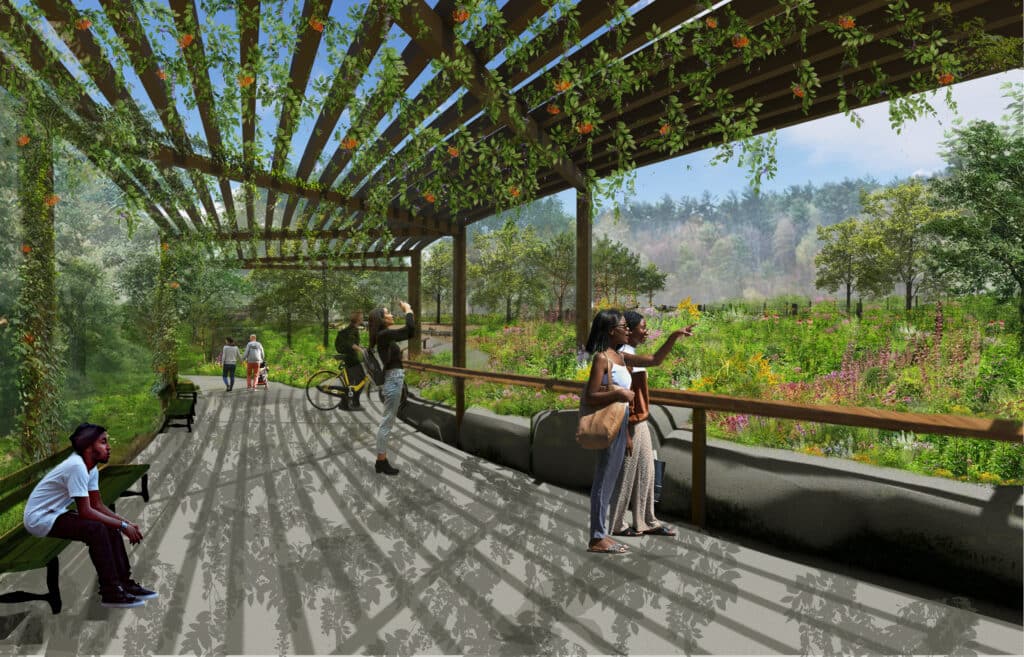
Pollinator Meadow: At the south end of the Vale, a pollinator meadow features insect and bird-friendly species such as Wild Bergamot (Monarda fistulosa), Yarrow (Achillea millefolium), and Pale Purple Coneflower (Echinacea purpurea pallida ). An accessible pathway leads to an arbor planted with Coral Honeysuckle (Lonicera sempervirens) for shade and beauty, and features a viewing area with a leaning rail. Historic benches line the rear of the arbor, along with companion seating for those in wheelchairs. Subtle fencing protects the meadow and surrounding woodland areas, which serve as wildlife habitat.
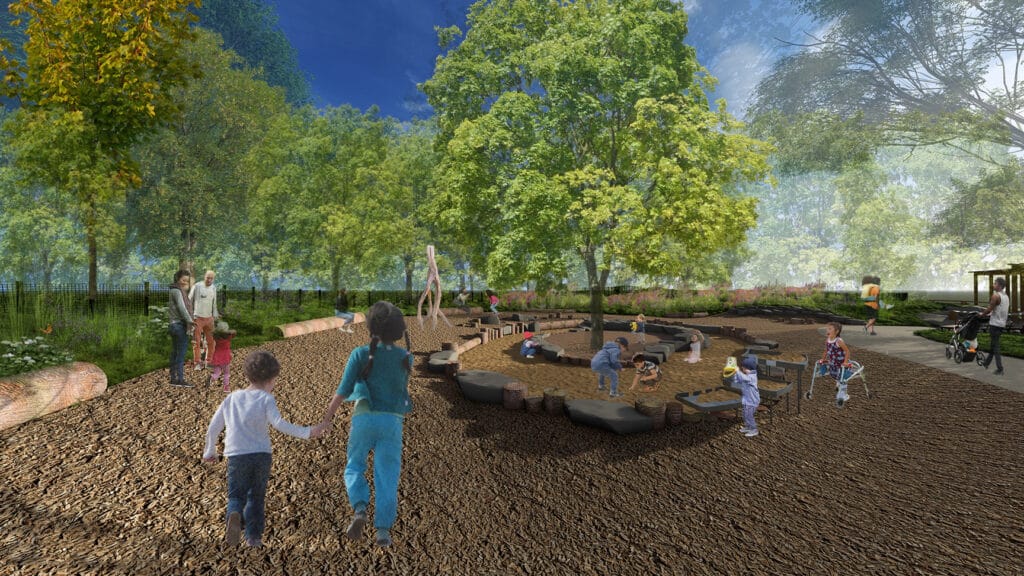
Nature Exploration Area: In the center of the Vale, a nature-based play area is defined by additional pollinator plantings and native trees and shrubs that provide habitat for birds and pollinators. The shrubs are thickly planted to serve as a natural border, separating the wooded edges from the primary play spaces, which include: a variety of tree stumps, logs, and boulders configured for walking, jumping, balancing, sitting and playing; an accessible hand pump; and a sand area for children of all ages and abilities. Accessible seating is dotted along the edges of the play area with a central, native red maple tree to provide shade.
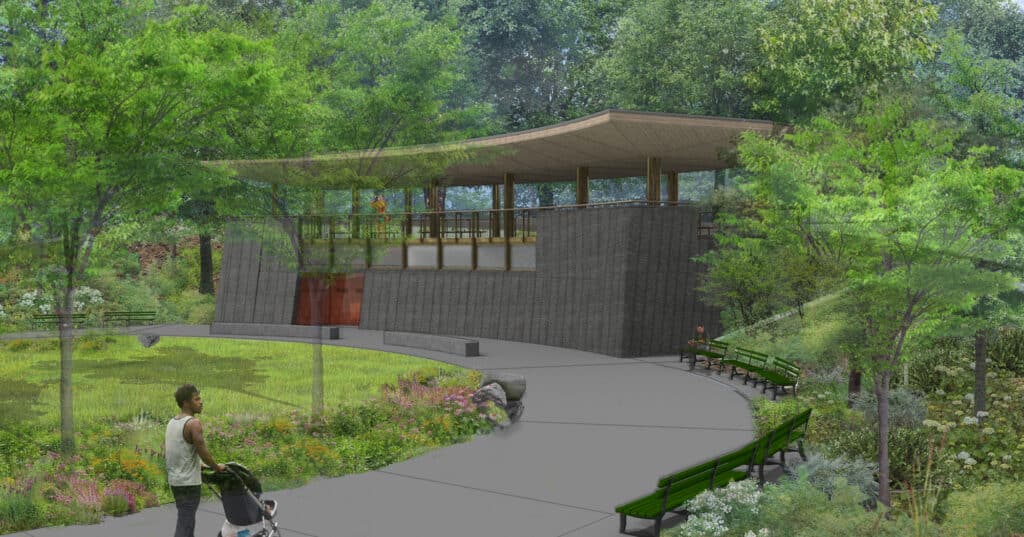
Picnic Lawn and Northeast Pavilion: At the north end of the Vale, the landscape opens to a picnic lawn and small pavilion. A mix of native oaks frame the open lawn, creating an inviting, shady and flexible open space. The perimeter is lined with historic benches and companion seating, and includes a new drinking fountain. The pavilion is built into the hillside at the northern end of the site, with a green roof that becomes an extension of the pollinator meadow. The pavilion is LEED certified and constructed of stone and wood finishes that are evocative of the park, with bird-friendly fritted windows. The ground floor, accessible from the lawn, features 8 all-gender composting toilets, 2 of which are ADA accessible, and are similar to those found at the Wellhouse at the park’s Peninsula. In addition, a grey water garden recycles sink water to further reduce waste. An upper-level terrace provides shaded seating to enjoy the views of the landscape.
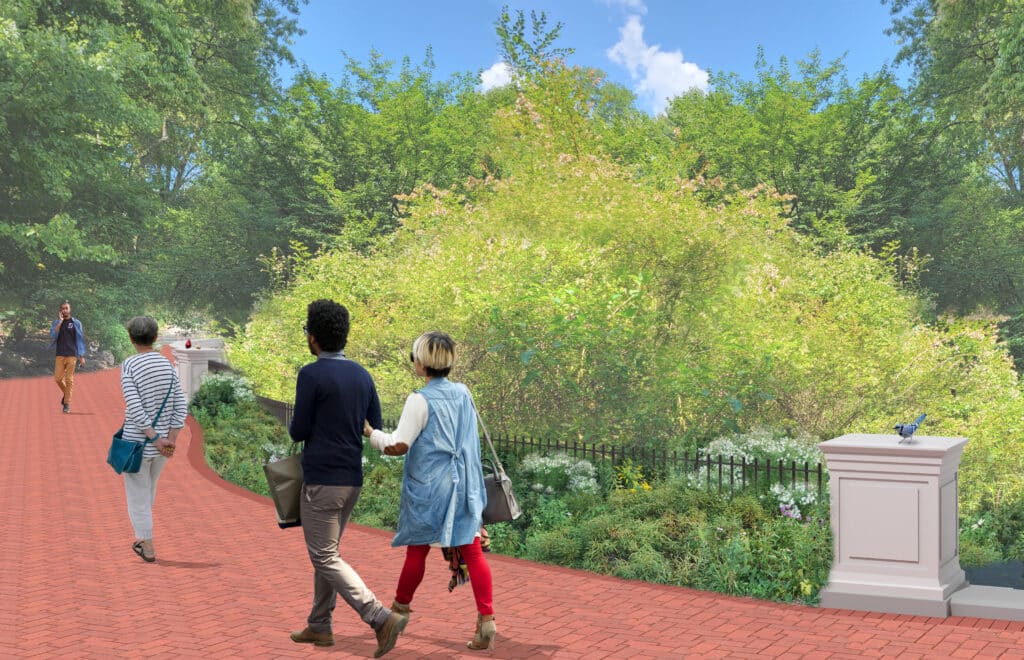
The Lower Vale is the site of the historic Children’s Pool: Dating back to the park’s creation in the mid-1800s, the Children’s Pool also is a habitat for birds and other wildlife. Its design features several layers of history: the original Olmsted and Vaux design; McKim, Mead and White updates that introduced formal elements including a marble balustrade; and additional changes made during the WPA era in the 1930s. The restoration brings back the pool’s shoreline and historic architectural elements; replaces invasive plants with new native plants; makes pathways ADA accessible; and installs discreet bubblers to circulate the water and prevent stagnation. The restoration will also add bird-friendly features, including bird baths just below the water’s surface, along with aquatic plantings and mudflats. The landscape is surrounded by woodland areas that were restored in recent years after being devastated by severe storms including Hurricane Sandy.
Learn more about capital projects in Prospect Park on our capital projects tracker.