Prospect Park Alliance Celebrates Black History Month
February 11, 2026
Happy Black History Month! Prospect Park Alliance is celebrating this important heritage month by making a path through history in Prospect Park.
The Drummer’s Grove—A Prospect Park Tradition
In the 1960s, an Afro-Caribbean community emerged just east of Prospect Park in the neighborhoods of Flatbush, East Flatbush and Crown Heights. In 1968, some of these “Little Caribbean” residents began to meet weekly at the southeastern corner of Prospect Park for a drum circle. Calling themselves the Congo Square Drummers, they came together in Prospect Park “to rehearse, and just to play and rejoice,” says Abiodun McCray, one of the group’s founders. Recalling African ancestors who brought their musical traditions to the West Indies in the 17th century, this was a way for the Congo Square Drummers to celebrate community and remember home in the midst of the African Diaspora.
Over the years, the drum circle grew, and in 1997 Prospect Park Alliance added seating to the area and gave it the name of Drummer’s Grove as a part of a renovation of the Parkside and Ocean Avenue Entrance. In 2021, the Alliance renewed the area with new seating carved from park trees and additional benches. Today the beat goes on in Drummer’s Grove, and it continues to be a place where anyone can stop by on a Sunday during the warmer months to play, dance, or simply enjoy the music.
Above photo courtesy of Elif Altinbasak. See a video of the Prospect Park Drummer’s Circle in full swing on YouTube, courtesy of Humberto Middleton.
The Sacred History of Gran Bwa
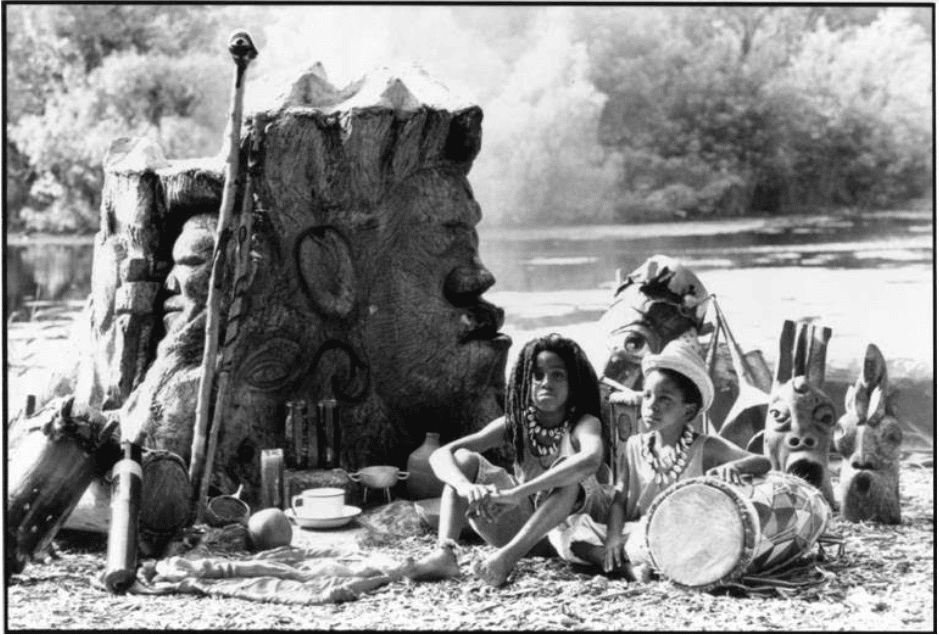
Did you know that Gran Bwa, a sacred Haitian gathering spot, is located next to Prospect Park Lake?
As a part of the 20th-century wave of West Indian immigrants to Brooklyn, many Haitians settled in the neighborhoods of Flatbush, East Flatbush and Crown Heights. Deenps Bazile, one of these Haitian immigrants, was walking through Prospect Park in the 1980s when he felt spirits instructing him to carve a tree trunk next to the Lake. Bazile sculpted a large human head, two small human faces, a lion and a legba (a Haitian Vodou spirit) in the tree stump. This sculpture sparked the use of the area by the Haitian community, and it came to be named after Gran Bwa, the Haitian Vodou spirit associated with trees, plants and herbs. Although the sculpture is no longer in the park, its site continues to be an important gathering spot for the Haitian community.
The largest celebration at Gran Bwa, called Bwa Kayiman, happens annually in August. At this ceremony, participants memorialize the Haitian revolution—which propelled it to become the first black nation to attain independence from their enslavers—and nourish Haitian Vodou spirits. Says Makini Armand, “Gran Bwa is a place to experience the healing power of nature and community, for us to restore ourselves through experiences that bond us with one another and with the natural community around us… it’s an important part of our cultural background to keep families together, and preserve the Haitian heritage and keep the culture alive.”
Photo via Prospect Park Alliance Archives. See a video of the annual celebration in Prospect Park, courtesy of CityLore on YouTube.
Shirley Chisholm, Brooklyn’s Hometown Hero
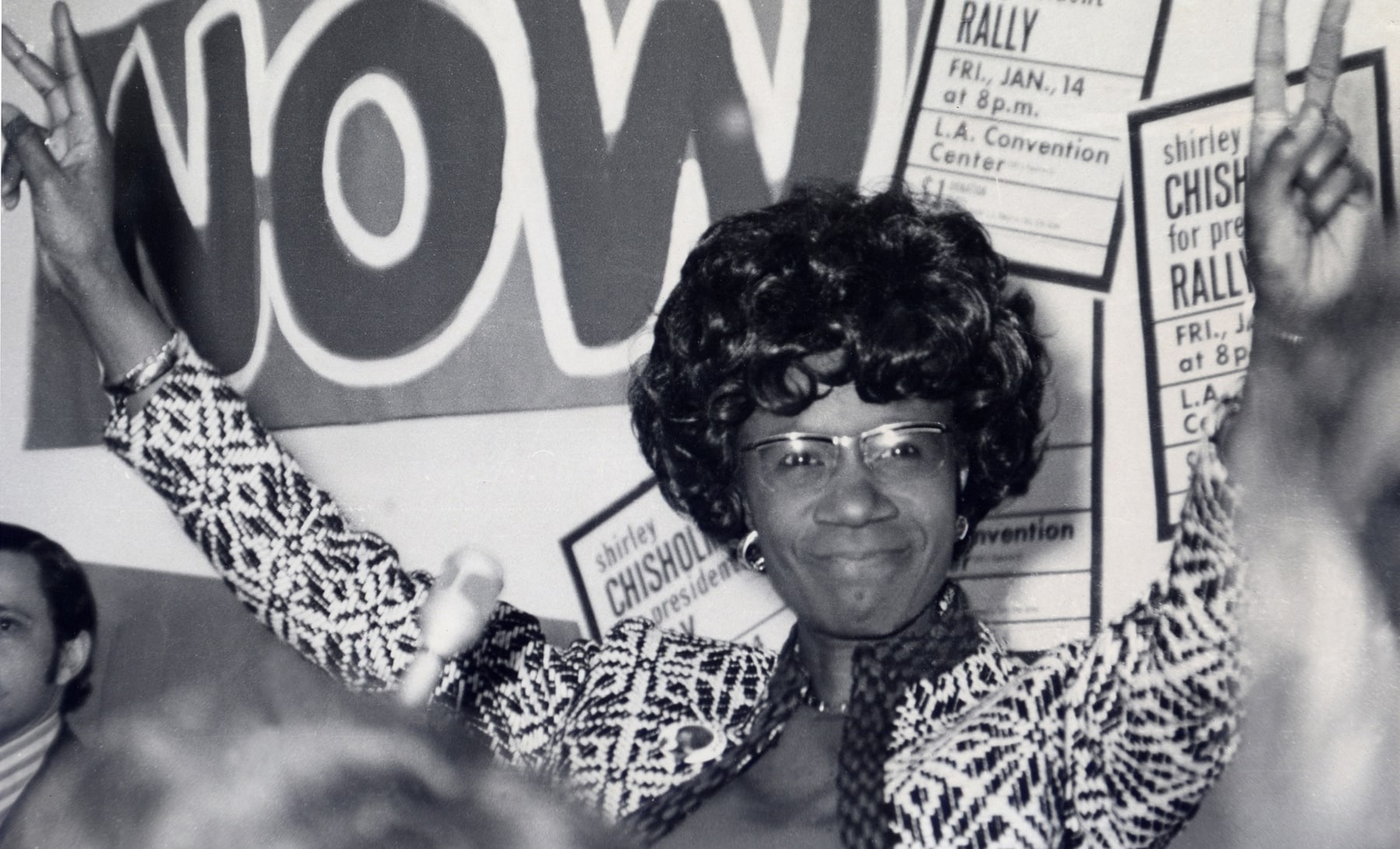
A local hero, Shirley Chisholm was born in Brooklyn to Barbadian parents. She spent her childhood in Barbados but returned to Brooklyn at age ten and lived much of her life in Crown Heights, to the northeast of Prospect Park and blocks away from the site of the historic Weeksville village. Chisholm was the first black Congresswoman in U.S. history, and both a leader and an advocate for residents of Brooklyn and the country at large. Her notable achievements in Congress included working to expand access to food stamps, helping to pass Title IX and extending minimum wage requirements to domestic workers. In 1972, Representative Chisholm became the first Black major-party candidate to run for President of the United States. True to her famous slogan, “unbought and unbossed,” Chisholm refused to abandon the interests of her constituents, no matter what establishment politicians did to intimidate her or mitigate her efforts.
Prospect Park Alliance is honored to welcome a monument to Shirley Chisholm to the Parkside and Ocean Avenue entrance to the park —a location where the Alliance is undertaking a significant restoration as part of the work to improve the park’s eastern perimeter. After an open call for submissions and public feedback, artists Amanda Williams and Olalekan Jeyifous were selected to design the park’s new monument—the first to be commissioned as part of the She Built NYC program, which seeks to expand representation of women in the City’s public art collection. The monument is slated to be installed in the coming year, and the Alliance is also created a new pavilion at the entrance that will include community gathering space, public restrooms and exhibit panels on Chisholm’s life and accomplishments. The pavilion is currently in the design phase, and slated to break ground in 2027.
Photo: a still from “Chisholm ‘72” from Realside Productions.
ReImagine Lefferts
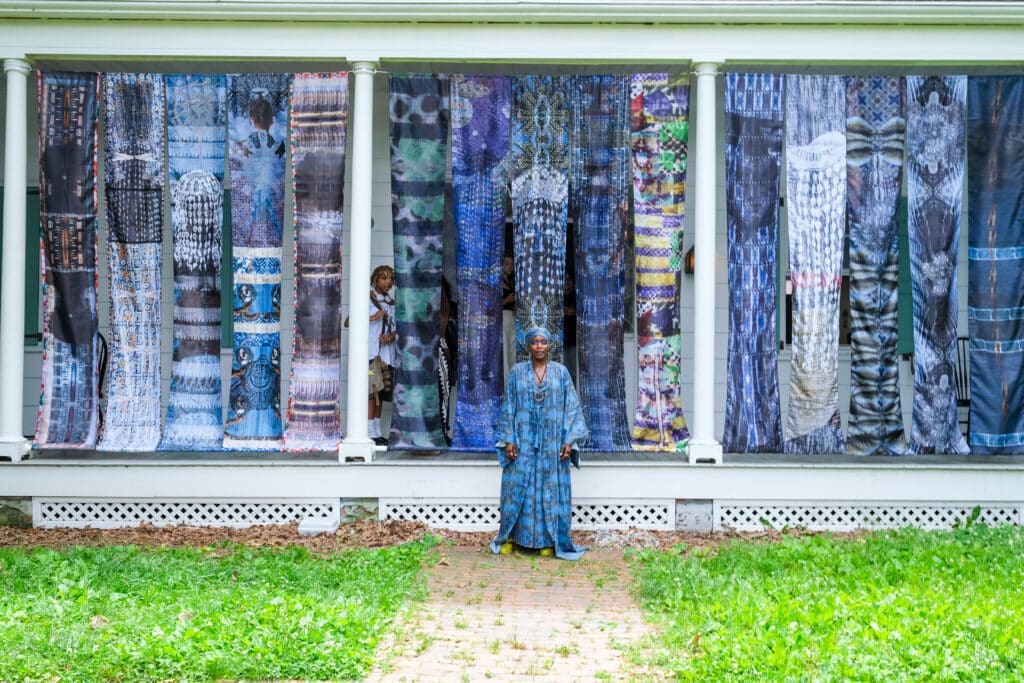
In 2021, the Alliance launched the ReImagine Lefferts initiative, funded through a Humanities in Place grant from the Mellon Foundation. The initiative seeks to re-envision the mission and programming of the museum to focus on exploring the lives, resistance and resilience of the Indigenous people of Lenapehoking, whose unceded ancestral lands the park and house rests upon, and the Africans enslaved by the Lefferts family. By focusing on stories of resistance, resilience, empowerment and joy, while also recognizing the legacies of dispossession, enslavement and oppression, the Alliance seeks to create a safe space for engaging with our collective past as well as contemporary issues affecting our communities today. To date, the Alliance has identified 25 people enslaved at the house between its 1783 construction and the 1827 abolition of slavery in New York. In 2024, the Alliance commissioned artist Adama Delphine Fawundu to create a site-specific installation inspired by this research, encompassing 25 fabric banners that transform the house’s Flatbush Avenue facade, honoring the heroism of these Africans enslaved by the Lefferts family. Each spring through fall, the Alliance offers a range of cultural programs and exhibits that honors these histories. Visit our Lefferts web page for more information.
Photo: Adama Delphine Fawundu: Ancestral Whispers, 2024. Photography by Laylah Amatullah Barrayn