c. Virginia Freire

Spring Migration Bird Checklist

March 15, 2019

We hope you rested up during the quiet winter season, because spring is here and the migratory birds are on their way to Prospect Park! With over 150 migratory species set to make an appearance in Brooklyn’s Backyard, Prospect Park Alliance has pulled  together a spring migration checklist to help you make the most of this spectacular season. 

Prospect Park lies on one of the great flight paths of the natural world, the Atlantic Flyway. In fall, many species migrate south along the Atlantic coast to reach wintering grounds with abundant food. In spring, they head north to return to their breeding territories. During these months, birds of all kinds stop briefly in the park, and for some species, the park is their destination.

Spring Migration Checklist:

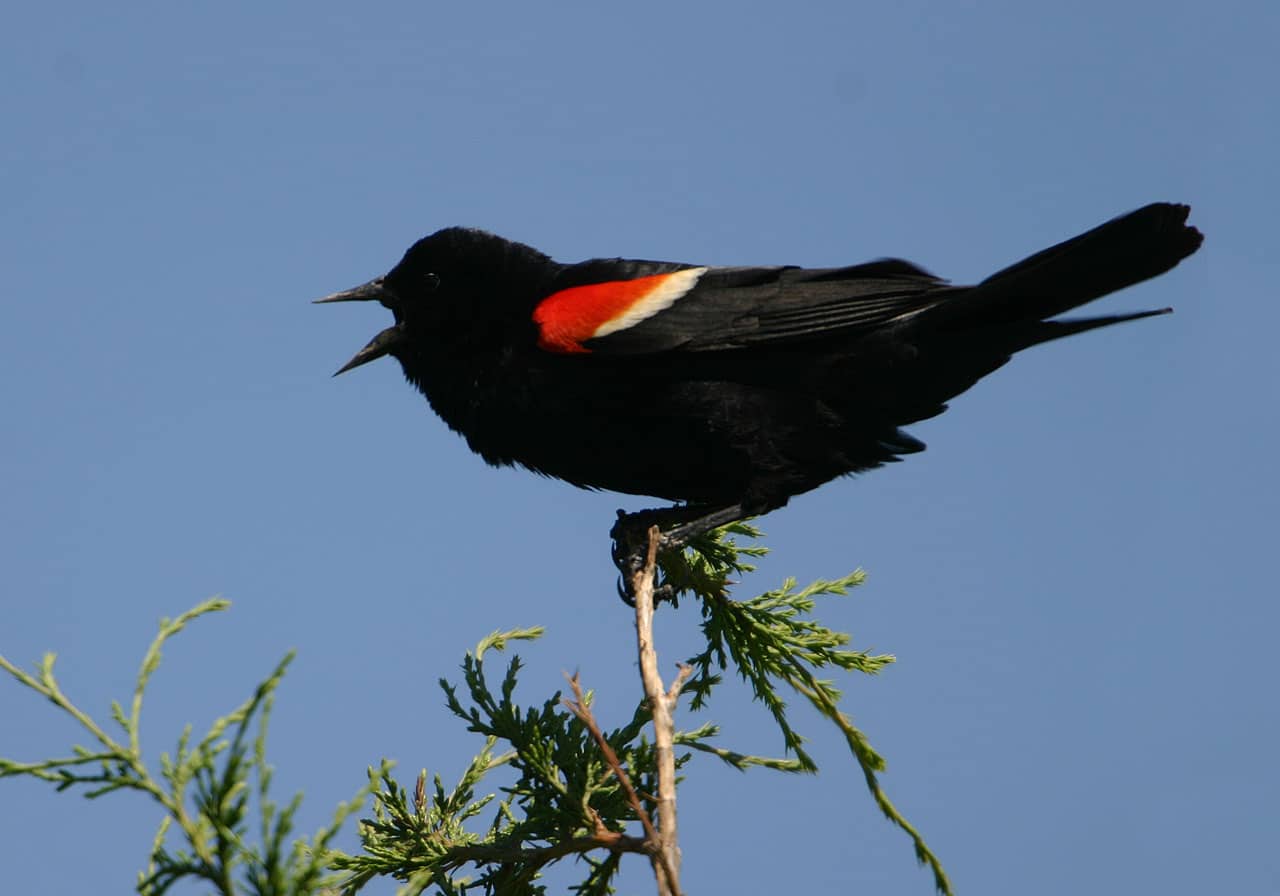
  • Early Migrants: Starting as early as February or March, early-migrating species of birds are making their way through Prospect Park. These species include the easily identified Red-winged Blackbird, as well as the Common Grackle, Eastern Phoebe and the well-camouflaged American Woodcock.
redwingedblackbird.jpg

Red-winged Blackbird, c. Steve Nanz

  • Birds of Prey: Many raptors begin their trip north early in the season. In addition to our year-round Red-tailed Hawk residents, look for Merlins, Cooper’s Hawks, Sharp-shinned Hawks and more soaring above the park, perched on high vantage-points and snacking on small mammals.
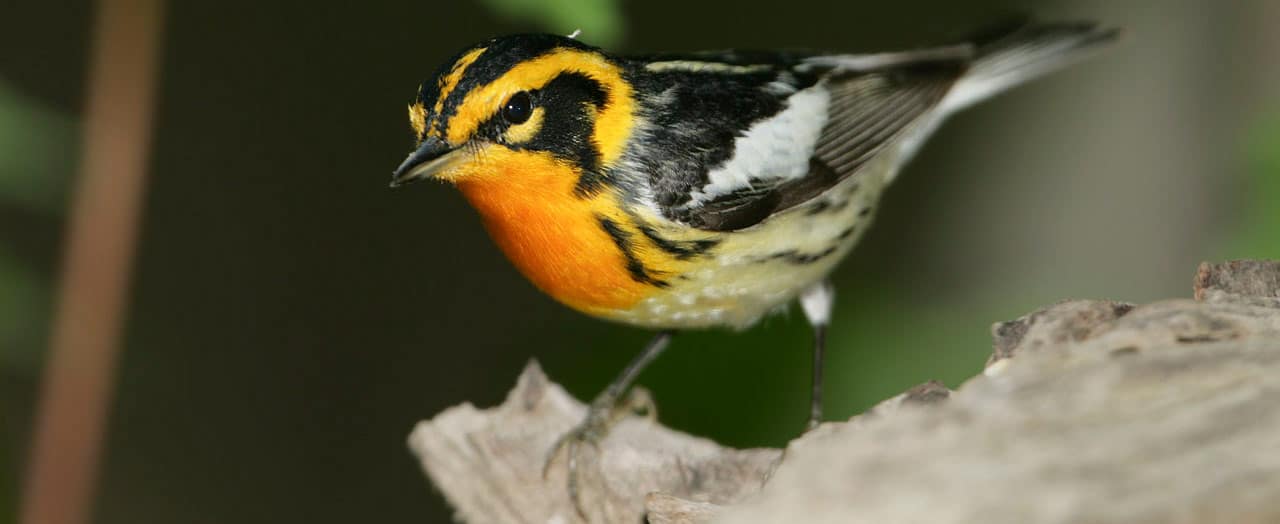
  • Warblers: The rock stars of spring migration, 36 species of warblers can be spotted over the course of spring migration in Prospect Park. Known for their bright colors in spring, warblers are a group of energetic songbirds that migrate at night and rest and re-fuel by day. When warblers journey over Brooklyn, they are likely to stop in Prospect Park, where they feed on insects and berries. Rested and refueled, they continue on their way after a day or two. Keep an eye out for vibrant yellows of the Common Yellowthroat and Palm Warbler, blue on the Black-throated Blue Warbler and Cerulean Warbler, and fiery orange on the handsome Blackburnian Warbler.
blackburnian-warbler-bird.jpg

Blackburnian Warbler, c. Steve Nanz

  • Brightly-colored Migrants: When peering through foliage, some of the easiest birds to spot are the brightly-colored species. Bright red might mean a Scarlet Tanager, vibrant orange could be a Baltimore Oriole, blues show up on Eastern Bluebirds and Indigo Buntings, and even our year-round American Goldfinches wear their brightest spring yellow.

Ready to grab a pair of binoculars and get out into the park? Check out our birdwatching page, with birding tips, locations and upcoming bird walks in Prospect Park. And, download the Prospect Park App to see how many birds you can spot in our Backyard Birds Challenge!
 

Prospect Park Archives

The Prospect Park Dairy’s Throwback Menu

Today, Prospect Park visitors can enjoy a range of tasty bites around the park, from King David Tacos to the Bluestone Cafe, but when the park first opened in the 1800s, the Dairy was the place to eat. 

In the late 1800s, before pasteurization, fresh milk was a near-delicacy for Brooklyn residents, accustomed to a gray, watery variety of milk produced by most city cows. When the Dairy opened in Prospect Park, a herd of cows grazed in the park and provided “wholesome milk, cold or warm” to grateful park picnickers, according to the Brooklyn Park Commissioners. 

 In the summer of 1871, it was reported in the Annual Report of the Brooklyn Park Commissioners  that “11,000 quarts of milk were disposed of by the glass, or in larger quantities to pic-nic parties (sic), or family gatherings, for which purpose the grounds in this vicinity of the dairy cottage were a favorite resort during the summer.”

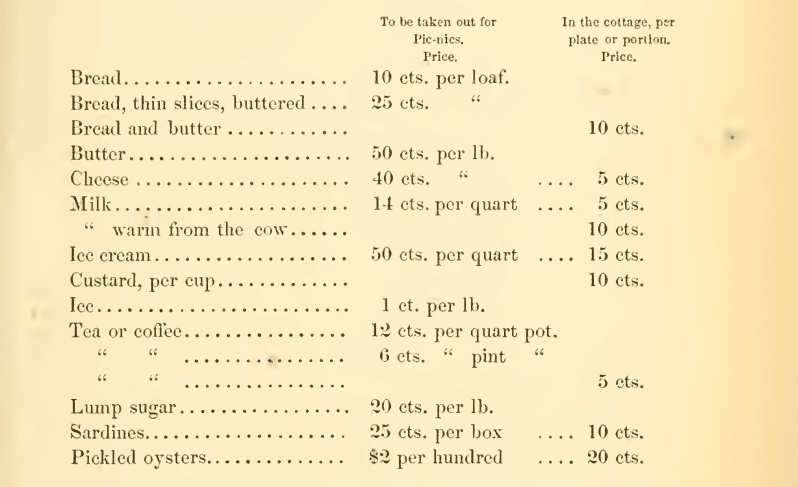
Dairy customers could purchase a variety of snacks for their picnic, some of which may seem odd by today’s standards:

dairy-menu-1871.png

In addition to the custard cups, sardines and pickled oysters, denizens could order cold beef, ham, tongue and sandwiches in advance, and “biscuits, crackers, cracknells, maccaroons (sic), ladies’ fingers, almonds raisins, figs, prunes, etc.” were available “at usual grocers’ and confectioners’ charges.” Tables and seats were provided at the Dairy without charge, and croquet equipment, hoops and various table dressings could be rented on site. 

About the Dairy, Prospect Park creator Frederick Law Olmsted wrote, “A man from any class shall say to his wife… ‘My dear, when the children come home from school, put some bread and butter and a salad in a basket and go to the chestnut tree…We will walk to the dairy-man’s cottage and get some tea and fresh milk for the children and take our supper by the brook-side.’”

The Dairy was a hugely popular Prospect Park attraction during this time, not least because picnicking was prohibited in Central Park. Though the Dairy was razed in 1935 by then Parks Commissioner Robert Moses, picnicking became synonymous with Brooklyn’s Backyard, and continues to be a preferred pastime of Prospect Park visitors. 

View a gallery about the history of picnicking in Prospect Park. 

Planning your picnic in Prospect Park? Check out the park’s current food offerings, which include the Bluestone Cafe at the LeFrak Center at Lakeside, King David Tacos and more. 

The Dairy’s menu was located by our friends a Turnstile Tours! Prospect Park Alliance and Turnstile Tours host a series of walking tours that examine the many layers of natural and human history to be found in Brooklyn’s Backyard. Learn more and get tickets for a park tour today. 

Prospect Park’s Scandalous First Wedding

February 20, 2019

It probably wouldn’t surprise you to know that Prospect Park is a popular destination for weddings. Couples who love the park and want a slice of nature in their Brooklyn nuptials choose the Prospect Park Picnic House and Boathouse as the place to tie the knot every year. But this was not always the case. The first Prospect Park wedding, which took place in the park’s former Rose Garden in 1923, caused quite a stir.

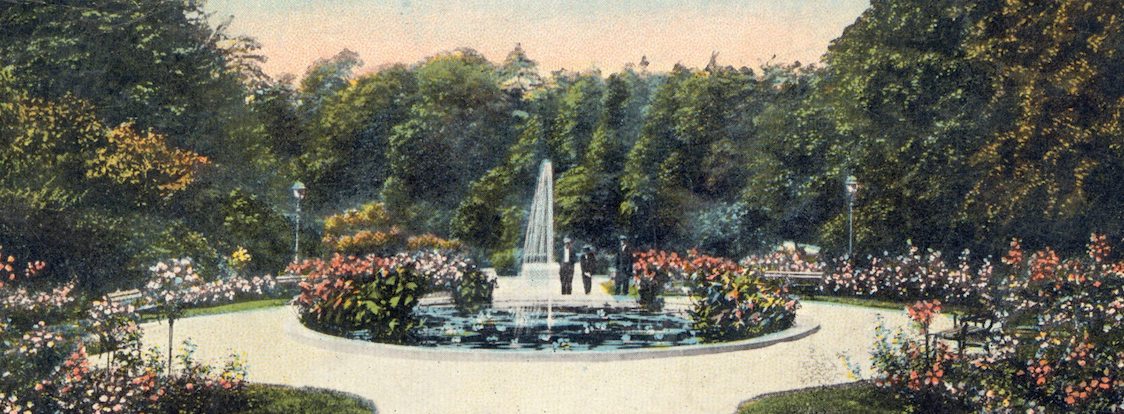
Let’s go back to the 1870s, the early days of Prospect Park when famed designers Olmsted and Vaux were first plotting out the features of the park. The area, known now as the Rose Garden, was first conceived as a children’s playground, with a carousel powered by a real horse, seesaws and swings. Despite the attractions, the playground was not a popular destination. The area’s geographic features made it too hot and exposed to be a playground. It was, however, an excellent climate for growing roses. And so the park’s Rose Garden came to be.

In the 1890s, the landscape was transformed into a botanical destination. Three water basins—reconstructions of which are still visible at the site—filled with aquatic plants and fish were installed by the design firm of McKim, Mead and White. The landscape was planted with an assortment of exotic flowers and roses, and in 1901, the Brooklyn Daily Eagle exclaimed, “some of the roses are larger than teacups,” adding, “there can be no finer sight in the domain of floriculture in the United States.”

In 1923, local residents Elizabeth Hoyt Senarens and Owen Morton Gunderson applied for a permit to be married in Prospect Park. The Park Commissioner issued the first permit of its kind for a wedding to be held at 7:45 am, “so that there might be no interruption from a crowd of romping children or unsympathetic grownups.” The wedding was considered a novelty and a scandal, and was widely covered in the press by publications such as Brooklyn Life, Brooklyn Standard Union, the Brooklyn Daily Eagle, and even The New York Times.

The bride, Elizabeth Senarens, explained to the Brooklyn Daily Eagle that, “she had always yearned for roses and even as a little girl had thought the Prospect Park rose gardens the most romantic place for a wedding in the world.” But the media attention surrounding the nuptials took its toll when the couple’s pastor decided at the last minute that he would not officiate the wedding. In an interview with the Times, the reverend was quoted saying, “I never did consent to perform the ceremony in the park,” and that when he learned the details he, “refused at once.”

Rose Garden postcard_Bob-Levine.jpg

The Rose Garden in a vintage postcard, c. Prospect Park Archives/Bob Levine Collection

The couple had difficulty finding another pastor to perform their ceremony, until finally Rev. Ernest J. Marvin of the Fenimore Street M.E. Church agreed on the condition of anonymity. The press did not honor this request, publishing his name as the minister who presided over this historic first wedding in Prospect Park.

The morning of the wedding came, according to the Standard Union, “blowing a chilly breeze… not at all conducive to romance.” Police were on hand to contain the throngs of curious onlookers, and the wedding proceeded, attended by the family and friends of the wedding party, newspaper reporters and photographers, and a “few stragglers on their way to work,” as per a report from the Times.

Today, the former Rose Garden is entering a new phase, as Prospect Park Alliance begins plans to reimagine this northeastern area of the park that has seen little use in past decades. In recent years, the Alliance has invited the community to help shape the future of this area through community visioning and feedback surveys. Thanks to the input of the local community, Alliance architects are now in the process of designing a space that will serve the entire community, and encourage many more memorable occasions for years to come.

This story comes to us from Turnstile Tours: learn about this and other amazing tales of park history on a tour of the Prospect Park presented by the Alliance in partnership with Turnstile Tours. Tours for families and park lovers of all ages explore the parks’ little known treasures, architectural and cultural history.

Learn more and take a park tour this spring!

C. Prospect Park Archives/Bob Levine Collection

Highlights from the Bob Levine Collection

February 18, 2019

You may recognize from past Throwback Thursdays that many of Prospect Park Alliance’s archival materials come from one person: Bob Levine. His collection spans more than a century of Brooklyn’s Backyard and includes thousands of archived postcards, photographs, maps and drawings of the park. But who is this collector extraordinaire? 

Take a look at some of the highlights of the collection, selected by Bob Levine himself. 

A Brooklyn native and Prospect Park enthusiast, Levine has, in his own words “circled Prospect Park.” He grew up on Ocean Parkway, lived as a young man along Ocean Avenue and is now settled in Park Slope. “I always loved nature,” says Levine of his connection to the park, “it just felt like a natural draw.” As a child in the 1960s, he played little league at the Parade Ground and explored the park’s vast nature trails. When, in his teens, he developed an affinity for collecting remnants of the past, it was only natural that Prospect Park was a subject he gravitated towards.

Levine initially made a connection with Prospect Park Alliance in the 1990s. At the time, he ran a program that helped autistic members of community find work. The Alliance had a call out for volunteers, and Levine and his group helped clean the Lake. Levine then made a connection with Alliance archivist Amy Peck to share his bounty of archival findings. 

Today, Levine is still actively adding to his collection of Prospect Park historic materials, and much to the delight of Prospect Park Alliance and the park community, still contributing to the Prospect Park Archives.

Expanding Food Options in Prospect Park

January 22, 2019

Prospect Park Alliance Invites Local Businesses to Submit Proposals for New Food and Drink Options in Brooklyn’s Backyard

Prospect Park Alliance, the non-profit organization that sustains Prospect Park, has issued a Request for Proposals to expand food and drink offerings via mobile carts operated by local vendors. This will enhance current food and drink offerings in the park, which include King David Tacos and concessions at the LeFrak Center for Lakeside, and, in season, the Prospect Park Carousel and Parade Ground. 

Prospect Park Alliance is seeking vendors that have the experience and skills necessary to operate quality food services at reasonable prices and enhance the experience of park users. The Alliance is seeking vendors who can offer interesting, affordable and healthy food to complement the experience of park users.

With more than 10 million visits annually, Prospect Park is Brooklyn’s Backyard, and Prospect Park Alliance serves the diverse communities that call Brooklyn home, as well as visitors to the city. Locations for the mobile food carts include 9th St and Prospect Park West, Flatbush Ave and Plaza Street, Dog Beach, the Long Meadow Ball Fields at 10th Avenue, and the Vanderbilt Playground Loop in Prospect Park. 

Interested businesses can attend a pre-proposal meeting at the Prospect Park Picnic House on Monday, February 4, at 12 pm, and the Alliance recommends that those planning to respond to the RFP make every effort to attend this recommended meeting. All proposals submitted in response to this RFP must be sent in no later than Monday, March 4, 2019. 

Learn more and RSVP. 

RSVP-btn-orange.png

Prospect Park Alliance is the non-profit organization that sustains, restores and advances Prospect Park, “Brooklyn’s Backyard,” in partnership with the City. The Alliance provides critical staff and resources that keep the Park green and vibrant for the diverse communities that call Brooklyn home. Learn more about Prospect Park Alliance.

Park Checklist: 7 Ways To Enjoy Winter

January 15, 2019

Every season is wonderful in its own way, and we love winter in Prospect Park! From snow-day activities to school break programs, here are 7 recommendations from Prospect Park Alliance to get you out of the house and into the park this season.

  1. Head to the LeFrak Center at Lakeside: It’s time to get out on the ice in Prospect Park. From a day of skating with friends, to  curling, hockey and more, visit the park’s state-of-the-art skating rink this season while the weather is still cold. 
  2. Enjoy family fun at the Audubon Center and Lefferts Historic House: Prospect Park’s beloved Audubon Center and Lefferts Historic House have plenty of exciting programming coming up this winter. Stop by both sites for Lunar New Year activities, including paper-lantern making at Lefferts, and a variety of activities during Martin Luther King Jr. Day and the Presidents Week school break.  
  3. Take a Winter Walk: If summer crowds aren’t your scene, the colder months are the perfect time of year to explore the park’s 585 acres of meadow, forest and lake. Take a look at our suggestions for winter walks that take advantage of the season. 
  4. Tennis, anyone? It can be hard to suit up for exercise in sub-zero temperatures, but the Prospect Park Tennis Center has you covered, literally. Heated, indoor courts are the perfect place to get a work out, with friends or in classes, while supporting Brooklyn’s Backyard.  
  5. Winter Birdwatching: Brush off the binoculars, because winter is the perfect time for birdwatching in Prospect Park! With the leaves off the trees throughout the park, spotting birds is easy–and Prospect Park is a world-renowned location to spot our avian pals. Learn more about birdwatching in the park, including upcoming birdwalks in January and February.
  6. Sledding in Prospect Park: While our winter is off to a mostly snow-free start, our fingers are crossed for flurries in the forecast and plenty of sledding days in the park. Check out our list of top Prospect Park sledding locations, and see you next blizzard!
  7. Take in our Prospect Park exhibition at Brooklyn Historical Society–last chance! An offsite checklist suggestion, head to the Brooklyn Historical Society to check out The Means of a Ready Escape: Brooklyn’s Prospect Park, an exhibition presented in partnership with Prospect Park Alliance that celebrates the founding vision of the Park, and traces its social and historical trajectories. Hurry, this exhibition closes February 10!

Learn more about upcoming events in Prospect Park.

c. Harpers Weekly

The “Beautiful Spectacle” of Skating Carnivals

January 14, 2019

Long before Prospect Park Alliance opened the LeFrak Center at Lakeside, the park’s state-of-the-art skating rink, Brooklynites would wait for temperatures to drop and then flock by the tens of thousands to Prospect Park’s 60-acre Lake to enjoy this winter recreation, with crowds as many as 20,000 skaters on peak days.

A Brooklyn Daily Eagle article from February 7, 1881, reports:

The ice on the Prospect Park lake is eighteen inches thick. Yesterday it was crowded all day, and by the afternoon the surface was rather badly cut up by the steel runners of the skaters. The ice is swept at night after the skaters leave and flooded a little, so as to make a smooth, even surface in the morning. The skaters are allowed to remain until 11 o’clock on all except Sunday nights, when the ice is cleared at about 9 o’clock.

With so many people flocking to the ice, and with periodic warm spells midwinter, the scene at the Lake was often chaotic. Collisions between skaters and slips through thin patches of ice were not uncommon, and “keepers” uniformed in blue kept watch over the crowds.

By the early 1900’s, the city was staging “skating carnivals” as reported on in the January 2, 1915, edition of the Brooklyn Daily Eagle:

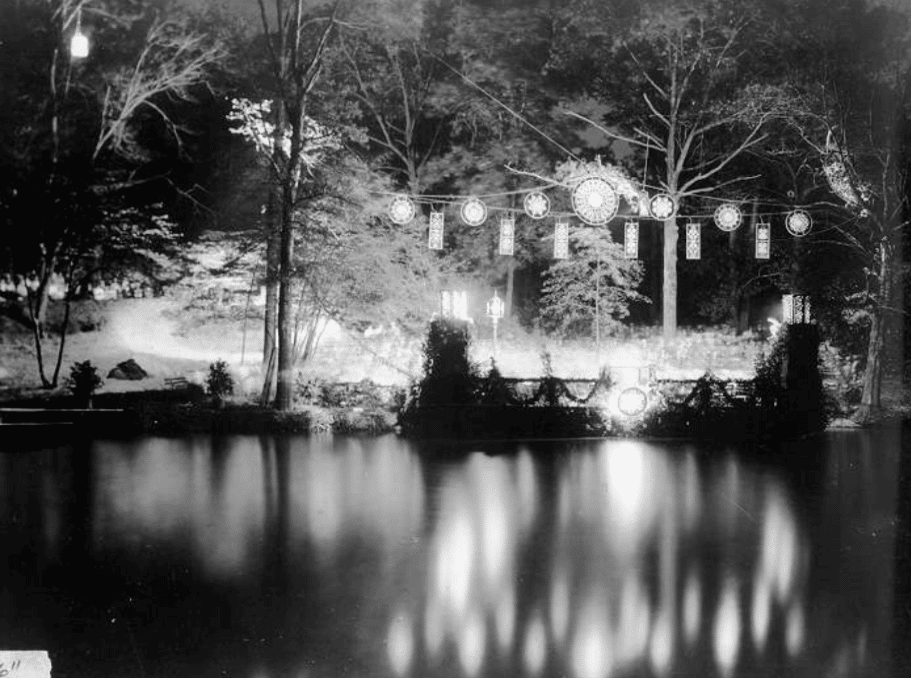
Brooklyn was treated to a new and beautiful spectacle last night, when the Park Department permitted a skating carnival to be held on the Prospect Park lake. In the light of the full moon and with a thousand Chinese lanterns strung around the big body of water, 10,000 men, women and children flitted to and fro on the flashing steel runners. Some of them even danced on the ice.

skating_carnival_archive_nyhistsoc.png

Photo of lanterns around frozen Prospect Park lake, c. New York Historical Society.

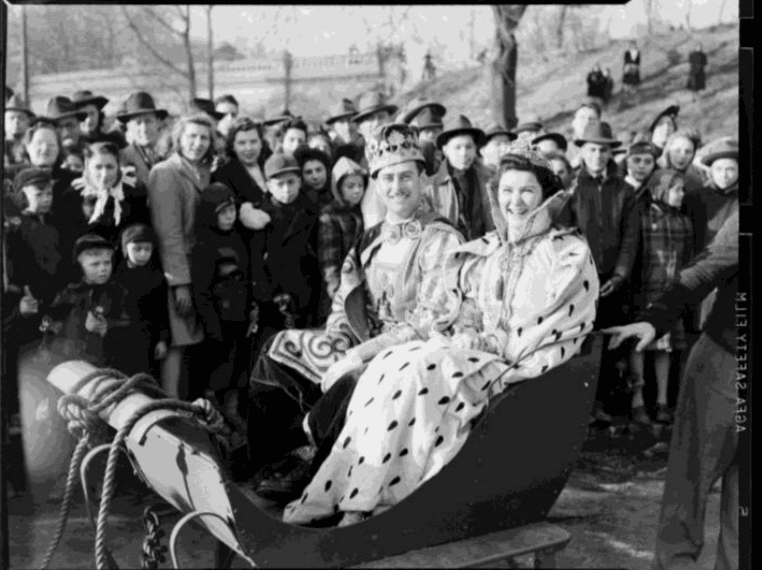
In the 1930’s and ’40’s, as all kinds of ice sports became increasingly popular, these “carnivals” became daytime sporting events with thousands watching from the shore, including ice hockey matches between teams from Brooklyn Technical High School and Manual Training High School (later called John Jay High School), speed-skating races and figure-skating displays. The carnivals even had an Ice Carnival King and Queen.

ice_carnival_king_queen_archives.png

The 1936 Ice Carnival King and Queen, c. Prospect Park Archives.

Today, New Yorkers can experience with thrill of gliding over the ice throughout the season at Prospect Park’s LeFrak Center at Lakeside. And while skating on the Lake is no longer permitted, Lakeside’s two rinks are just yards from the water’s edge, and visitors need only a bit of imagination to relive those festive nights over 100 years ago.

Resolve to Stay Fit in 2019: Play Tennis

January 10, 2019

For many of us, the start  of a new year is the perfect time to refocus our health and fitness goals. An excellent way of staying fit in the colder months is to play indoor tennis at the Prospect Park Tennis Center, which features 11 heated, indoor courts.

“Tennis is often not thought of as an aerobic exercise, but a good match can provide a really strenuous workout that builds strength, agility and burns calories,” says Paul Campbell, Director of the Prospect Park Tennis Center. “Most importantly, tennis is fun so people tend to stay with it.”

Prospect Park Alliance offers a variety of tennis play and instruction for all ages and skill levels. Youth can take part in group instruction in our Junior Development program, or take intensive classes during the upcoming President’s Week school break. Adults can find leagues of their own, and sign up for group or private lessons with our pros. And, with courts open from 7 am to 11 pm, seven days a week, there’s no bad time to get started!

Why choose tennis over another sport? “People that learn tennis often continue playing well into their later years,” says Campbell. Knowing how to play tennis is a lifelong skill, and “it frequently fosters friendships and camaraderie that can last a lifetime.”

Ready to get started? All you really need are a pair of sneakers, balls and rackets are available for sale or rent at the Center, and included in the cost of a lesson.

Learn more about the various Tennis Center offerings for adults and children, and see you on the court!

Still from "Chisholm '72," courtesy of Realside Productions

A Monument to a Trailblazer Comes to Prospect Park

November 30, 2018

On U.S. Representative Shirley Chisholm’s birthday and the 50th anniversary of her election to Congress, Prospect Park Alliance President Sue Donoghue joined First Lady Chirlane McCray and Deputy Mayor Alicia Glen in Prospect Park to make a momentous announcement.

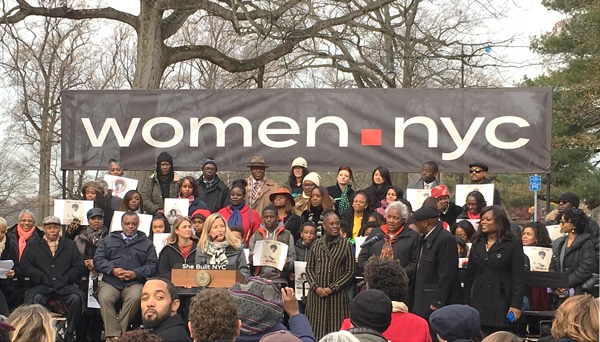
The group held a press conference at the Parkside and Ocean Avenue entrance to the Park to announce that a monument to Representative Shirley Chisholm, the political trailblazer who was both the first black Congresswoman and the first woman to seek the Democratic presidential nomination, will be erected at that location, where the Alliance is undertaking a significant restoration as part of our work improving the Park’s eastern perimeter.

“As Brooklyn’s Backyard, we are deeply honored to welcome this important monument to a true Brooklyn hero, Shirley Chisholm,” said Sue Donoghue, president of Prospect Park Alliance, the non-profit that sustains Prospect Park in partnership with the city. “We thank the Mayor, First Lady Chirlane McCray and the Department of Cultural Affairs for selecting Prospect Park as the site for this commemoration, which will serve as a critical focal point of our restoration of the Parkside and Ocean Avenue entrance to Prospect Park.”

chisholm_event.jpg

A local hero, Chisholm was the first black Congresswoman in U.S. history, and both a leader and an advocate for residents of Brooklyn and the country at large. Her notable achievements in Congress included working to expand access to food stamps, helping to pass Title IX and extending minimum wage requirements to domestic workers. In 1972, Rep. Chisholm became the first black major-party candidate to run for President of the United States. This is the first monument commissioned as part of She Built NYC, an initiative that sought public nominations to honor the New York City women who have changed history.

“Congresswoman Shirley Chisholm’s legacy of leadership and activism has paved the way for thousands of women to seek public office,” said First Lady Chirlane McCray. “She is exactly the kind of New York woman whose contributions should be honored with representation in our public spaces, and that is now being realized with She Built NYC.”
 
“Shirley Chisholm was an American original—a fearless trailblazer who broke barriers and had an unrivaled commitment to justice,” said Alicia Glen, Deputy Mayor for Housing & Economic Development. “From standing up to Congressional leadership to taking bold bipartisan action, Rep. Chisholm made sure everyone knew she was ‘unbought and unbossed.’ There is no one more deserving than Rep. Chisholm of a statue honoring her life and legacy; may New Yorkers of all backgrounds be inspired by her story.”

The site of this monument will serve as a critical focal point for the Alliance’s $9.5 million restoration of the Parkside and Ocean Avenue perimeters and entrance to Prospect Park, which includes $6.7 million in funding by Mayor de Blasio, $2 million in funding from Borough President Eric L. Adams, and $750,000 in funding from Council Member Mathieu Eugene. This large-scale restoration by the Alliance will include new sidewalks and paving, new historic lighting and street furniture, the planting of new trees and the addition of a protected bike lane. 

As the steward of Brooklyn’s Backyard, Prospect Park Alliance is deeply honored to welcome this important monument to a true Brooklyn icon. Read more about this announcement from the Mayor’s office.

c. Paul Martinka

Prospect Park’s New Freeze-Resistant Fountains

November 23, 2018

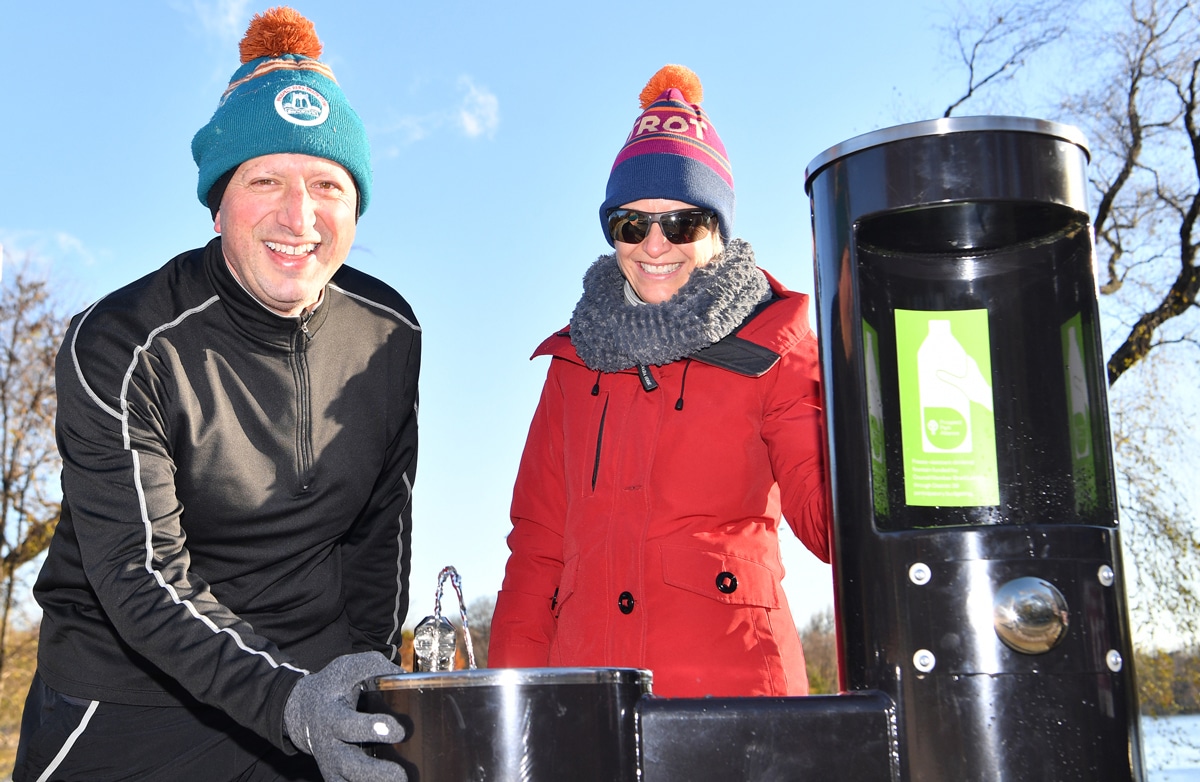
Runners rejoice! On Thanksgiving morning, November 22, 2018, New York City Council Member Brad Lander joined Prospect Park Alliance President Sue Donoghue for the inaugural gulp from the park’s new freeze-resistant drinking fountains. Council Member Lander funded this $175,000 project through the District 39 participatory budgeting initiative that has enabled the Alliance to install four fountains along the Prospect Park Drive that are freeze-resistant and available through all four seasons.

fountain-lander-martinka.jpgCouncil Member Brad Lander and Alliance President Sue Donoghue try out the new freeze-resistant fountain. c. Paul Martinka
The event took place on Prospect Park’s lakeshore, moments before the Prospect Park Track Club’s annual Turkey Trot, which took place this year in historic sub-zero temperatures. Prospect Park offers miles of roadways and paths for serious and recreational runners and walkers, including the park’s 3.36-mile running lane along the Park Drive.

“I’m thrilled that the freeze resistant water fountains, a 2016 participatory budgeting project winner, are finally up and running in Prospect Park,” said Council Member Brad Lander. “The many runners, cyclists, and walkers who exercise in the park during the winter months will now be able to hydrate even in the coldest weather! Huge thanks to the Prospect Park Alliance for their help in seeing this project through.”

Due to problems posed by frozen pipes, traditional city drinking fountains are turned off during much of the fall and winter months. This leaves the multitudes of Prospect Park’s runners, walkers and visitors without a source of drinking water in the park.

The year-round fountains’ plumbing is located more than four feet underground—below the “frost line,” where the water is well insulated and does not freeze. Each time the fountain is used, the water drains all the way back down, preventing frozen pipes. This feature necessitates that users hold the button down for a few additional seconds than at a traditional fountain, giving the water time to make it up to surface-level.

A total of four new year-round fountains will grace the Park Drive—two entirely new fountains near the Garfield Street Entrance and the Vanderbilt Street Playground, as well as two retrofitted existing fountains near the Parkside entrance and the Ballfields. 

Prospect Park Alliance is the non-profit organization that operates the park in partnership with the City. We provide critical staff and resources that keep the park green and vibrant. Through the end of 2018, support the park and your donation will count double thanks to a matching challenge.

Learn more about projects in the park on our Capital Projects Tracker.