c. Guido Castellani

Meet the Woodlands Youth Crew: Adam Odeh

August 28, 2019

Meet Adam Odeh, a 16-year-old student at Sunset Park High School and a current member of the Woodlands Youth Crew. Along with other high school students, Adam has spent his summers alongside Prospect Park Alliance staff working to restore Prospect Park’s nearly 200 acres of fragile woodlands: Brooklyn’s only forest. We caught up with Adam at the end of his final season with the crew to learn about his experience in Prospect Park. 

Hi Adam! How long have you been a part of the Woodland Youth Crew?

I’ve been working as a member of the Woodlands Youth Crew for two years, since early August of 2017.

What is your favorite part of being on the Woodland Youth Crew?

My favorite aspect of the job has to do with the community. We have a great organization behind us and a crew that honestly feels like family. We work hard together throughout the heat and intense physical work but no matter what, we always find ways to work together and get through tasks we otherwise find impossible. 

Another aspect I find extremely enjoyable is the satisfaction of taking a step back after multiple days of hard work and being able to soak in the massive change we have created. Not only do we positively affect the environment, but also we improve the experience for visitors of the park by making the landscape even more inviting.

Do you have favorite projects that you’ve worked on?

My favorite project we’ve done in the park was cleaning areas of the watercourse of an invasive species called aquatic primrose. It rapidly spreads on top of lakes, and can destroy the ecosystem. The whole crew gets dressed up in waterproof waders, and goes into the lake with a mission to reduce the amount of primrose. It turned out to be an amazing experience.

Are there any skills you’ll take with you from the Woodlands Youth Crew?

I’ve learned a tremendous amount of skills throughout the two years I’ve been a part of the woodland youth crew. I plan to use the skills I learned by integrating it into my everyday life such as: never give up on tasks that may seem impossible, work smarter not harder because it’ll make life a lot less stressful, and don’t be scared to ask for help. 

I can honestly go on and on about it and I’m grateful for it all.

Watch this video to learn more about the Woodlands Youth Crew.

Brittany Buongiorno

A Day in the Life of a Park Tree

Ever wonder about the life of a tree? Not the changes that happen season after season, or even decade after decade, but day in and day out? That was the inspiration for an article in The New Yorker tracking the daily life of a London plane tree at the LeFrak Center at Lakeside, which dates back to at least 1874, when it was moved to its current location.

Recently, Prospect Park Alliance and NYC Parks supported scientist Jeremy Hise and journalist M.R. O’Connor, who lives near the LeFrak Center and is an avid park user, to test an instrument that “converts, or ‘transduces’, physical motion into an electrical signal… sensing and logging tiny changes in pressure. Instruments that use this approach, known as precision dendrometers, allow scientists to do something entirely new: watch how trees change and respond to their environments on an instantaneous scale.”

The dendrometer not only showed the miraculous daily life of one of the park’s most natural wonders, but a glimpse into a larger purpose of this technology: demonstrating “how our planet’s future is tied inextricably to the future of its forests.” As home to Brooklyn’s last remaining forest and 30,000 trees, Prospect Park is the ideal setting to explore these issues. According to the article, “Each year, the world’s forests extract billions of tons of carbon dioxide from the atmosphere—an estimated twenty-eight per cent of all emissions.”

Recently, through funding from the New York State Department of Environmental Conservation, Prospect Park Alliance conducted the first phase of a survey of its 30,000 trees. The findings for roughly half the park’s trees (those surveyed) were impressive: these trees help remove 24,000 pounds of pollutants and 3,000 tons of greenhouse gases from the air each year, and absorb 21 million gallons of stormwater runoff.

Learn more about the dendrometer in The New Yorker, and learn more about Prospect Park trees on our website.  

Interested in planting a tree in Prospect Park? Learn more about our commemorative tree program. 

c. Jordan Rathkopf

2019 Earth Day Preview

April 22, 2019

Join Prospect Park Alliance and community partners for our annual Earth Day Celebration at the Prospect Park Audubon Center! This environmental extravaganza, which focuses this year on protecting Prospect Park’s beloved animal species, takes place from 1–4 pm on Sunday, April 28.

RSVP-btn-orange.png

Among the free activities at this afternoon of environmental fun:

Catch-and-Release Fishing: Did you know that Prospect Park’s waterways are filled with many species of fish including largemouth bass? Learn all there is to know about fishing in the city, and try your hand at the sport, catch-and-release style with the DEC Bureau of Fisheries. This event is geared towards all ages and participants can borrow equipment on site. 

Insect Discovery Hike: Discover Prospect Park’s not-so-creepy crawlies on an Insect Discovery Hike with the Urban Park Rangers. Don’t be afraid of getting your hands dirty as we search high and low for amazing insects to discover their connection to us, and the importance of parks to provide habitats for them.

Bird Encounter + Spring Migration Bird Walk: Prospect Park has been designated one of New York’s Important Bird Areas (IBA), which are critical for bird conservation. During spring migration season, hundreds of species of birds visit Prospect Park to rest, recuperate from their long journey and fill their bellies. At the Audubon Center, Wildlife In Need Of Rescue and Rehabilitation will have a special exhibition of live raptors rescued from all around NYC and Long Island. Then head out for a bird walk to learn the importance of city parks to their wellbeing, the issues birds face and how you can help.

Lakeside Clean-Up: Prospect Park is home to Brooklyn’s only lake, a vital resource for the fish, amphibians and waterfowl that make up this precious ecosystem. Lend you hand by helping to clean-up Brooklyn’s only lake, led by the Brooklyn Fishing Club!  

Plus, enjoy many other family fun activities, arts and crafts, and animal encounters. RSVP to let us know you’re coming!

c. Virginia Freire

Spring Migration Bird Checklist

March 15, 2019

We hope you rested up during the quiet winter season, because spring is here and the migratory birds are on their way to Prospect Park! With over 150 migratory species set to make an appearance in Brooklyn’s Backyard, Prospect Park Alliance has pulled  together a spring migration checklist to help you make the most of this spectacular season. 

Prospect Park lies on one of the great flight paths of the natural world, the Atlantic Flyway. In fall, many species migrate south along the Atlantic coast to reach wintering grounds with abundant food. In spring, they head north to return to their breeding territories. During these months, birds of all kinds stop briefly in the park, and for some species, the park is their destination.

Spring Migration Checklist:

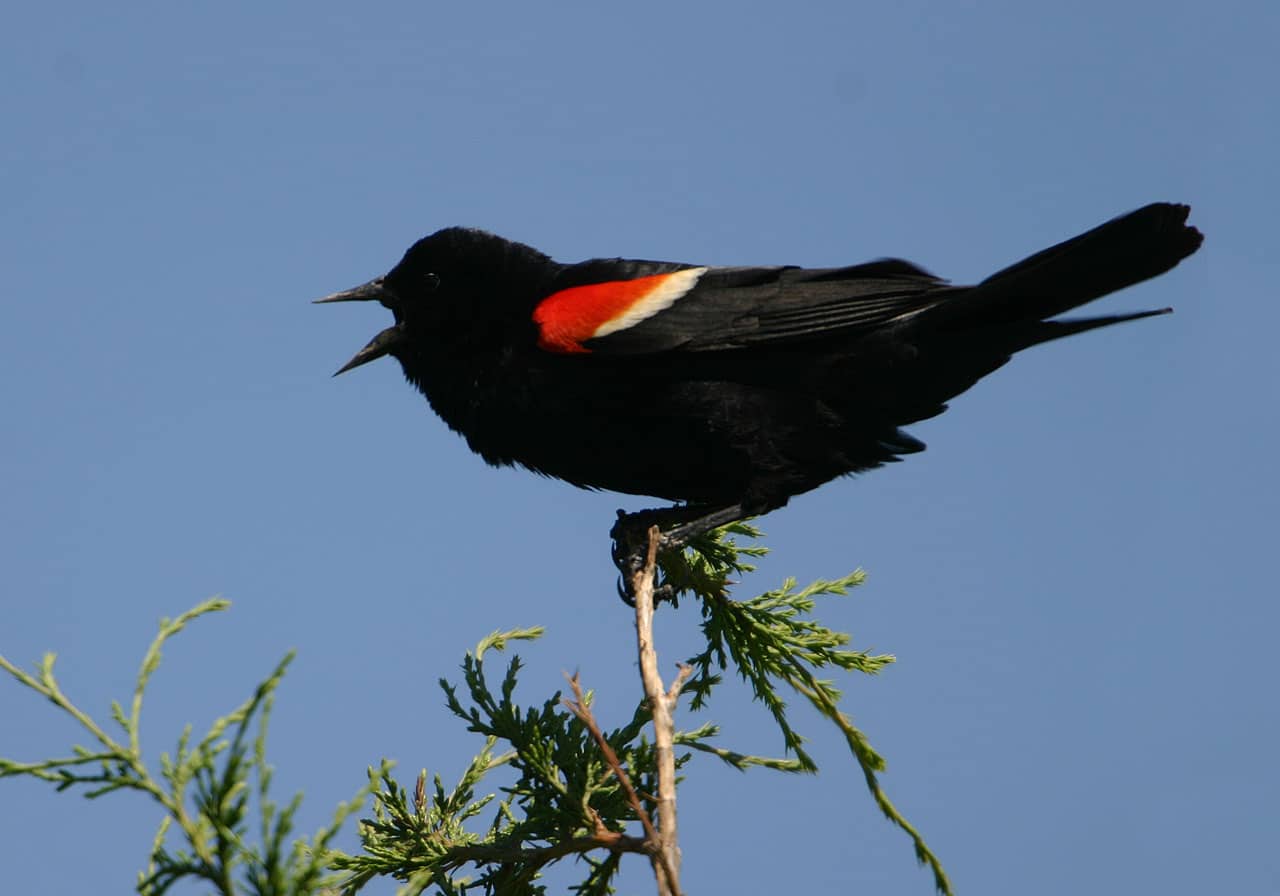
  • Early Migrants: Starting as early as February or March, early-migrating species of birds are making their way through Prospect Park. These species include the easily identified Red-winged Blackbird, as well as the Common Grackle, Eastern Phoebe and the well-camouflaged American Woodcock.

redwingedblackbird.jpg

Red-winged Blackbird, c. Steve Nanz

  • Birds of Prey: Many raptors begin their trip north early in the season. In addition to our year-round Red-tailed Hawk residents, look for Merlins, Cooper’s Hawks, Sharp-shinned Hawks and more soaring above the park, perched on high vantage-points and snacking on small mammals.
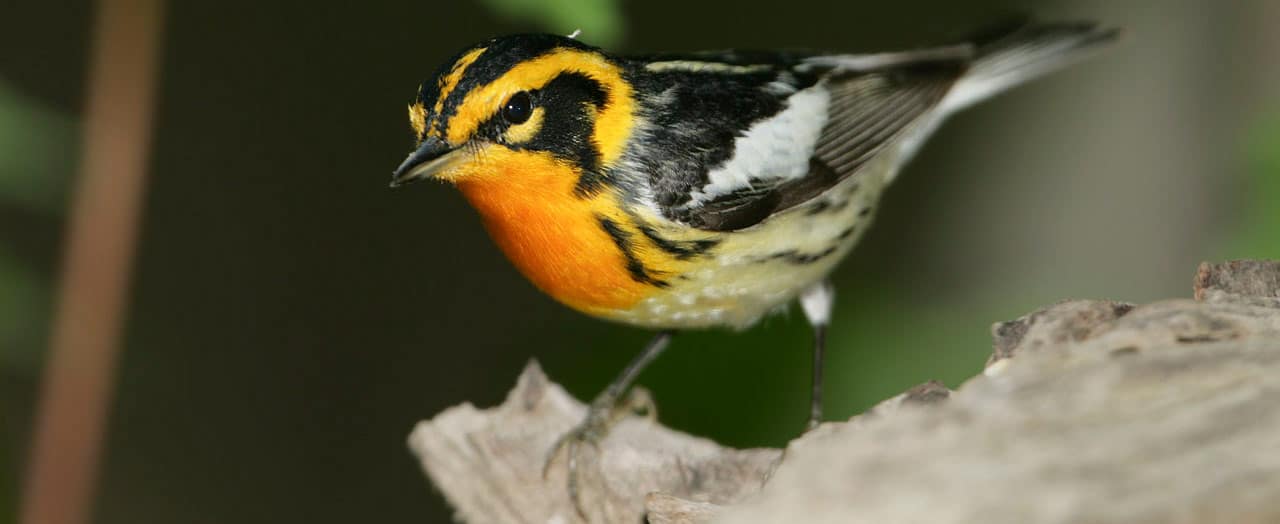
  • Warblers: The rock stars of spring migration, 36 species of warblers can be spotted over the course of spring migration in Prospect Park. Known for their bright colors in spring, warblers are a group of energetic songbirds that migrate at night and rest and re-fuel by day. When warblers journey over Brooklyn, they are likely to stop in Prospect Park, where they feed on insects and berries. Rested and refueled, they continue on their way after a day or two. Keep an eye out for vibrant yellows of the Common Yellowthroat and Palm Warbler, blue on the Black-throated Blue Warbler and Cerulean Warbler, and fiery orange on the handsome Blackburnian Warbler.

blackburnian-warbler-bird.jpg

Blackburnian Warbler, c. Steve Nanz

  • Brightly-colored Migrants: When peering through foliage, some of the easiest birds to spot are the brightly-colored species. Bright red might mean a Scarlet Tanager, vibrant orange could be a Baltimore Oriole, blues show up on Eastern Bluebirds and Indigo Buntings, and even our year-round American Goldfinches wear their brightest spring yellow.

Ready to grab a pair of binoculars and get out into the park? Check out our birdwatching page, with birding tips, locations and upcoming bird walks in Prospect Park. And, download the Prospect Park App to see how many birds you can spot in our Backyard Birds Challenge!


Ladybugs to the Rescue

November 13, 2018

First goats, now… ladybugs? Prospect Park Alliance is always on the lookout for innovative and environmentally friendly ways to sustain the park. In recent years, this meant a crew of goats to clear invasive weeds, and this past summer it meant the introduction of tens of thousands of ladybugs to combat a new challenge: lace bugs.

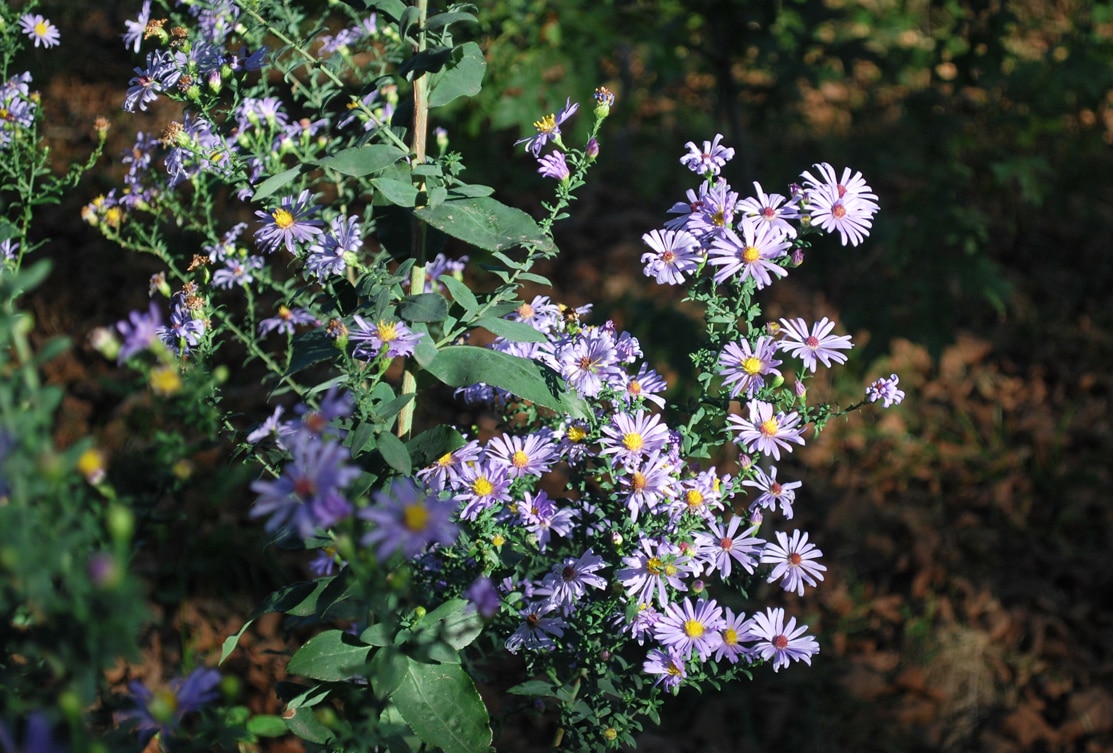
“We noticed that the asters were dying,” said Allie Loux, Prospect Park Alliance Assistant Gardener at the LeFrak Center at Lakeside. “They were turning yellow and brown and covered in these little dots.” Asters are an important perennial species and one of the most common flowers in Prospect Park, often sporting purple or white flowers. Lakeside’s aster plants had been hit with a lace bug infestation. These miniscule insects feed on the leaves of flowering plants and shrubs, and in high concentrations they can spell disaster for plants.

Alliance gardeners needed to find a solution to their lace bug problem, and wanted an alternative to traditional pesticides. “Lakeside is very wild,” said LJ Philp, Alliance Lead Gardener at Lakeside, “and when you’re spraying chemicals, you’re going to hit something else.”

aster.jpg

Aster plants in Prospect Park, photo courtesy of Christian Zimmerman, Prospect Park Alliance Vice President of Capital and Landscape Management 

While Prospect Park’s 585 acres may seem wild, this green space is a carefully cultivated ecosystem, and the Alliance’s crews avoid introducing chemicals whenever possible. Loux added, “when we use toxic chemicals, it’s getting in the air, in the water, harming our bodies as well as the animals and the plants. Maybe a pesticide will get rid of the lace bugs, but it will also probably kill something else.”

Their first course of action was to test neem oil, a natural pesticide derived from the neem tree. When they realized the necessary quantity of the oil would be prohibitively expensive and application would be time consuming, the gardeners got creative.

“Integrative pest management practices (the broad-based approach that integrates practices for control of pests) suggested finding a natural predator,” said Philp, “and ladybugs seemed like a great fit.” Introducing ladybugs, an insect not found in great quantities in the park, could be a tactic for managing the lace bug infestation while avoiding harmful chemicals, and sparing staff hours. “We did our research and weren’t worried that the ladybugs would out-compete other species or take over, so we decided to give it a try.”

In July, the gardeners, including Uriel Walker (formerly an Assistant Gardener at Lakeside) received their shipment of ladybugs, 72,000 for a grand sum of $150, and dispersed them in locations around Lakeside. They even left them with damp cardboard boxes smeared with honey (food and lodgings). “We wanted them to feel like they were in a safe place,” said Philp.

So, was this experimental treatment a success? “The lace bugs went away,” said Philp, “it worked!” In just a few short weeks, the infestation had cleared and the asters revived. In finding a creative solution, these Alliance gardeners preserved one of the park’s natural habitats, and added a few thousand lucky bugs to the ecosystem in the process.

Learn more about how Prospect Park Alliance sustains the park environment.

c. Elizabeth Keegin Colley

The Results Are In! Prospect Park Tree Survey

September 14, 2018

Prospect Park is an arboreal wonderland! Through a $75,000 Urban Forestry Grant from the New York State Department of Environmental Conservation, Prospect Park Alliance recently surveyed roughly 12,000 of the park’s 30,000 trees as part of its work in caring for the Park’s natural areas.

The survey not only provides a more nuanced picture of the park’s evolving ecosystem, but important insights into the economic, environmental and health benefits of Brooklyn’s Backyard. Conducted by Davey Resource Group (DRG), a well-respected urban forestry consultancy that has worked extensively in New York City, you can examine the results on the Prospect Park TreeKeeper Interactive Map.

“The survey has provided exciting insight into what we already knew were some of the park’s most important treasures, its trees,” said Prospect Park Alliance President Sue Donoghue. “We are all aware of how special this urban green space is, but now with this data we can quantify the economic benefit our community receives from these trees. It clearly reinforces just how precious this resource is, and how we must all do our part to care for it.”

During the survey, arborists inventoried trees primarily in the landscaped areas of the park, a total of 12,414 trees. Among the findings:

  • The surveyed trees provide more than $1.5 million in annual environmental benefits. This includes:

    • Air quality: 24,000 pounds of pollutants removed from the air each year, valued at $125,000;

    • Greenhouse gas benefits: 3,000 tons removed from the air, valued at $17,000;

    • Energy benefits: equivalent to 1,000 megawatt hours saved, valued at close to $700,000;

    • Storm water runoff benefits: 21 million gallons saved from the city sewer system, valued at $172,000.

  • There is a plethora of trees to be found in the park, including the 84 genera and 193 species represented in this survey. This includes numerous varieties of native cherries, maples and oaks, representing 41% of the trees surveyed, as well as less common species included the Southern magnolia, a fragrant, flowering tree whose northern range is growing due to climate change, and the bald cypress, which typically grows in swampy conditions and sends up knobby root growths called “knees.”

  • The largest tree surveyed has a diameter of 77 inches, or 6 feet, 5 inches across! This specimen tree, an American elm located near the Bandshell, is estimated to be over 100 years old.

  • The inventory also identified challenges faced by the park’s trees. The overall condition of the inventoried tree population is rated fair, however, 8% of the inventoried trees had stress caused by humans.

  • Emerald ash borer, an invasive beetle, was detected in the park’s ash tree population. And, though they have not been detected in Prospect Park, Gypsy moths and Asian Longhorn beetles pose the biggest threats to the health of the inventoried tree population.

  • A tree survey metric, “replacement value,” describes the historical investment in trees over time. The surveyed park trees have an estimated replacement value of more than $59 million!

In completing this report, DRG put together a Prospect Park Tree Management Plan, charting out the tree maintenance and planting needs in the park for the next five years. “By tracking the park’s trees, the Alliance can better care for these important natural resources, which play a big role in Brooklyn’s quality of life,” said John Jordan, Director of Landscape Management at Prospect Park Alliance.

There is a long way to go for Prospect Park Alliance to keep this vital community resource healthy and safe. Contributions from community members help sustain the park’s trees and fund the Alliance’s team of arborists and natural resources crew.

One way to support this important work is through the Alliance’s Commemorative Giving Tree Program. During planting seasons that take place each fall and spring, members of the community have the opportunity to plant a new tree in Prospect Park. Through this program, roughly 1,100 trees have been planted over the past 30 years. Each year, the Alliance plants a community tree on Arbor Day: learn more about how to get involved in this community celebration.

Want to learn more about Prospect Park’s trees? Check out the Prospect Park TreeKeeper Interactive Map to get info on each of the surveyed trees and their benefit to the community.

Kate Abrams

The Weed Harvester’s New Name

August 14, 2018

When Prospect Park Alliance President Sue Donoghue and City Council Members Brad Lander and Mathieu Eugene celebrated the launch of a brand-new aquatic weed harvester, it kicked off a contest to name the new machine. Over the course of six weeks, over 300 entries were submitted, narrowed down, and voted on by the park community. With nine final options and over 700 votes tallied, the winner by a margin of 30 votes is, “The Floating Goat.”

The weed harvester offers an environmentally sound method for Prospect Park Alliance’s Natural Resources Crew–a dedicated crew that cares for the park’s natural areas–to control excessive aquatic weed growth, such as floating water primrose and duckweed. Keeping these weeds at bay helps address the water quality of the 55-acre Prospect Park Lake. City Council Members Brad Lander and Mathieu Eugene funded this $140,000 machine through the Participatory Budgeting Process; and were on hand to launch the vehicle in June 2018 and join Prospect Park Alliance President Sue Donoghue and members of the Alliance’s Natural Resources Crew on the inaugural trip around the Lake. This project is part of a broader focus by Prospect Park Alliance, the non-profit organization that sustains the park, to care for the Park’s natural areas.

An earlier aquatic weed harvester had been dubbed, “The Lake Mess Monster,” often shortened to “Messy.” The Alliance decided to open the naming of the new harvester to the public, and in the first stage of the public naming contest over 300 potential names were submitted, largely by local residents. Those entries were narrowed down by Alliance staff, and nine were chosen as the finalists to by voted on by the community. The options were as follows: Chompy, Da Pride O Lakeside, The Floating Goat, Harvey the Harvester, Lake Mess Monster II, The Little Orange Peel, Orange Crush, The Sea Slurpent, and Weedzilla. Voters were allowed one pick per email address and three weeks to vote.

When the voting ended, and more than 700 votes were tallied, the winner by a margin of 30 votes was, “The Floating Goat.” The winning entry was submitted by Jack Costas (8), a “lifelong Prospect Park adventurer and proud Alliance member.” The name was inspired by the Alliance’s resident goat herd, which was brought in by the Alliance in 2016 and 2017 as part of a Superstorm Sandy grant from New York State Parks to help clear invasive weeds in the park’s hard-hit woodlands. The aquatic weed harvester will accomplish a similar task in Brooklyn’s only lake, and the Alliance is thrilled to welcome yet another “Goat” to the herd. Costas will receive a Prospect Park Alliance “swag” bag and will participate in a photo-op when the vessel has been lettered.

Learn more about the “Floating Goat,” the new aquatic weed harvester.

The Alliance’s Growing Greenhouse

This year, the Prospect Park Alliance horticultural crew dug in and got their hands dirty in order to make an exciting new addition to their team: a greenhouse. The existing structure, located in the park’s Garage Compound space for maintenance and operations, had last been used for this purpose roughly 20 years ago, and had served as storage in recent years.

The resurrection of the greenhouse was primarily undertaken by LJ Philp (Lead Gardener at the Lefrak Center at Lakeside), Uriel Walker (Assistant Gardener, Lakeside) and Allie Loux (Assistant Gardener, Lakeside), with the intention of creating a facility for Alliance gardeners to learn, experiment and move Prospect Park towards greater self-sufficiency and resiliency. 

With 19 variations of native species of plants, including grasses (Virginia wild rye, Little bluestem and Purple love grass) and broadleaf flowering plants (Black-eyed susan and Beardtongue foxglove), the three gardeners, along with the support of other Alliance staff, have nurtured the greenhouse back to life.

The undertaking required carpentry work (including the creation of roll-up sides for ventilation, meshing for shade, and a sliding door to combat heavy winter snow), as well as the installation of a misting irrigation system. The seven-month-old greenhouse is bursting with life and ecological lessons. 

The trial of learning how to grow these specific native plants from seed has proved to be a hands-on process of “positive trial and error,” says Philp. By supplementing the plants purchased at a nursery with home-grown additions, Prospect Park Alliance gardeners can better understand the full lifespan of Prospect Park’s plants and move towards self-sufficiency.

These native plants will not only live longer and thrive with less care, but they will also serve as a greater addition to the park’s ecosystem: providing food and habitat for native wildlife and pollinators and enhancing the park’s resiliency to help it thrive for years to come. 

The project is still young, and the team has bright eyes for the possibilities it can bring to Brooklyn’s Backyard.

Learn more about the Alliance’s work to sustain the Park’s environment.

Amanda Gentile

PPA Profile: Mark Anthony’s 25 Years at the Alliance

June 20, 2018

This June, Prospect Park Alliance marks a staff milestone as Mark Anthony, the supervisor of our Natural Resources Crew, celebrates 25 years with the Alliance, the non-profit that cares for the park. When Mark joined in the early 1990s, the Alliance was only seven years old, just beginning to make its mark in the revival of these vast 585 acres. We sat down with Mark to catch up on the changes he has seen in the park and his reflections on 25 years.

Congratulations on 25 years at Prospect Park Alliance! How did you begin your work with the Alliance?

I grew up in Brooklyn, and came to the Alliance through a program called the City Volunteer Corps, an organization that took inner-city kids and placed them in jobs that helped clean up the city. I started in a horticultural position, and after six months and an exchange program in Washington, D.C., I took a seasonal horticultural position at the Alliance. I started learning the trade from there, pruning and taking care of trees. I also got a second seasonal position working at the old ice skating rink in the winters. I switched back to horticulture in the summer, doing woodland work, and going back and forth, until the Alliance hired me full-time to work in the woodlands.

What were the woodlands like in 1994?

It was decrepit and a mess; it was unsafe to go through. You didn’t even know the woods were there because there was a vast amount of erosion, graffiti and garbage: you couldn’t figure out what was what. The trees there were mostly invasive species, there were no native trees where wildlife could thrive. That was the main reason we created the Natural Resources Crew, to bring back the habitat, diversify the woodlands, and make it better so people could use the park.

Have you seen the results of your work in the park?

Our work in the woodlands—the Ravine, Midwood, and Lookout Hill—helped mark the boundaries, to show “here are the woodlands, here is a path”. We restored the habitat, rebuilt slopes, planted native species. We restored the waterfall in the Ravine. It was underground, so we had to dig it up and get the water flowing through it again.
Our work has been successful. Certain bird species come through the park that we hadn’t seen in years. Chipmunks are back in the park, I don’t know where they went but they’re back now, the population is growing. We have owls and Red-tailed hawks, egrets that nest here and continue to come back each year. And the people are enjoying the park, too. They’re enjoying them too much, but you can’t fault them for that. That’s the reason we do the work, it’s people’s habitat too.

What do you enjoy about this work?

My job is a different than it used to be when I first joined the Alliance. I’m supervising the work of a crew, but I still get a chance to get my hands dirty. I go out and push the mower, push the weed-whacker, and even that is gratifying. You transform the area, make it visible and safe, and now people can actually use it. There’s gratification in seeing your labor and hard work put into this place. Seeing trees I planted that are surviving, some 15-feet tall. Seeing landscapes I worked on a long time ago, and they’re still thriving. This is something that is part of what I need to be doing: giving back to nature, people and the world.


c. Paul Martinka

Name the Weed Harvester

June 1, 2018

Update, August 2018: The weed harvester has been named! With over 700 votes tallied, the winner by a margin of 30 votes is, “The Floating Goat.” Learn more about the public naming contest.

Prospect Park Alliance President Sue Donoghue and City Council Members Brad Lander and Mathieu Eugene celebrated the launch of the newest addition to the Prospect Park Alliance fleet—a brand-new aquatic weed harvester. This vehicle offers an environmentally sound method for Prospect Park Alliance’s Natural Resources Crew, a dedicated crew that cares for the park’s natural areas, to control excessive aquatic weed growth, such as floating water primrose and duckweed, which will help address the water quality of the 55-acre Prospect Park Lake.

City Council Members Brad Lander and Mathieu Eugene funded this $140,000 machine through the Participatory Budgeting Process; and were on hand to launch the vehicle and join Prospect Park Alliance President Sue Donoghue and members of the Alliance’s Natural Resources Crew on the inaugural trip around the Lake. This project is part of a broader focus by Prospect Park Alliance, the non-profit organization that sustains the park, to care for the Park’s natural areas.

Weed Harvester Ribbon Cutting

“Prospect Park Alliance’s Natural Resources Crew works tirelessly to maintain the health of the Park’s natural areas, including this 55-acre body of water—Brooklyn’s only Lake,” said Prospect Park Alliance President Sue Donoghue. “Thanks to Council Members Brad Lander and Mathieu Eugene, and everyone who took part in the Participatory Budgeting process, today we get to cut the ribbon on this exciting new piece of machinery that will provide an environmentally sound method for the Alliance to control weeds and improve the water quality of the Prospect Park Lake.”

“The new aquatic weed harvester is one of many exciting improvements in Prospect Park that will help keep one of Brooklyn’s most heavily used resources in great shape, especially during the busy spring and summer seasons,” said NYC Parks Commissioner Mitchell J. Silver, FAICP. “We greatly appreciate the investments from our local elected officials that allow us to better care for one of the borough’s most beloved public spaces.”

“I’m thrilled to take part in the unveiling of the newest tool to reduce invasive weeds and keep Prospect Park Lake healthy– this Aquatic Weed Harvester” said Council Member Brad Lander. “It’s always exciting to see a Participatory Budgeting project idea become a reality, and I want to extend my deep thanks to Prospect Park Alliance for their work in making this happen. I also want to thank our district’s 2016 Participatory Budgeting Parks Committee, as well as delegates August Wendell, Josh Torpey, and his son Nicholas, who at the time was the youngest PB delegate! Without their work, this project would not have been possible.”

“As a longtime advocate for Prospect Park, I am honored to partner with Council Member Brad Lander, the Prospect Park Alliance, and the Participatory Budgeting Project to allocate $140,000 in funding for a new Aquatic Weed Harvester,” said Council Member Mathieu Eugene. This state-of-the-art machine is designed to significantly improve the water quality of Prospect Park Lake, which will in turn provide a long term benefit the park’s ecosystem. I also want to commend our constituents who made this initiative possible through the Participatory Budgeting Process. Today’s event is a reflection of our shared commitment as a community to protecting green spaces for future generations of New Yorkers.”

A photo op will be scheduled in the coming weeks when the “Floating Goat” is decaled.